

EuPFI2025
- 17th Annual Conference
- Programme
- Abstracts and Posters
- Soapbox Session Presentations
- Session Presentations
- Preconference Workshop Presentations
- Focus Session Presentations
- PCCA Award Winners
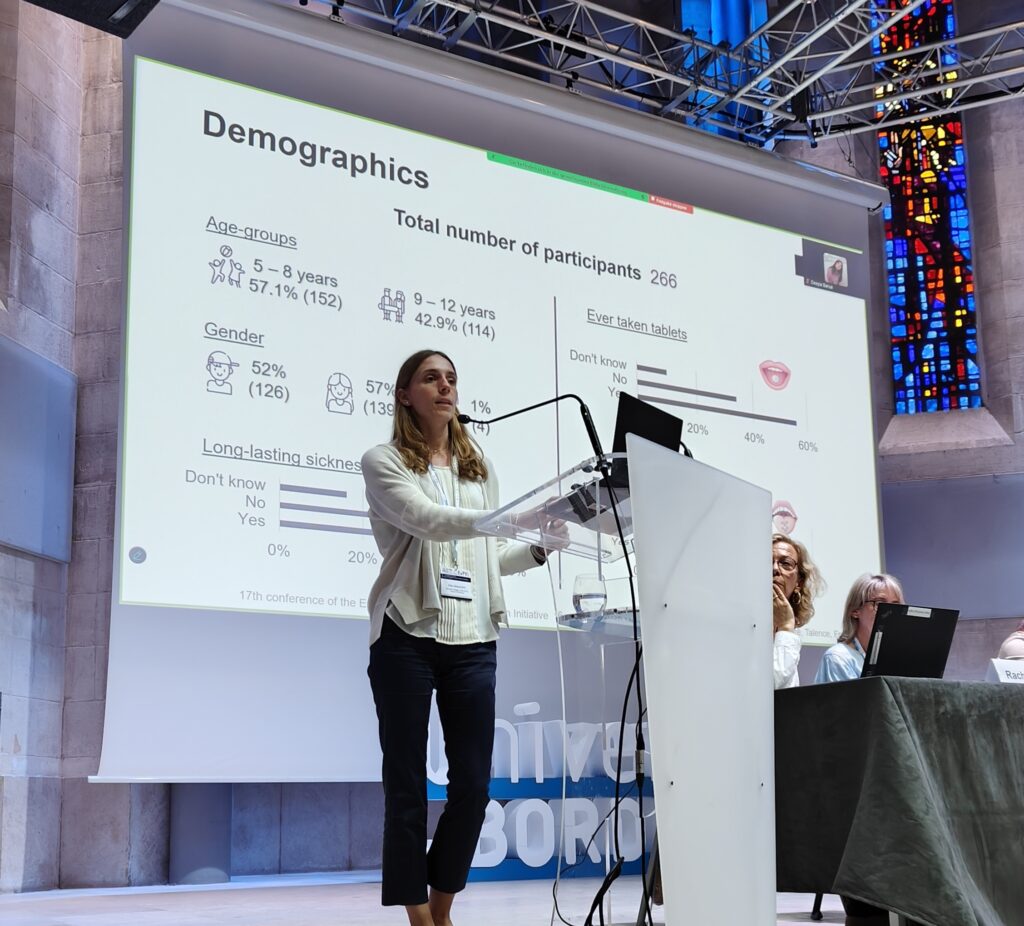
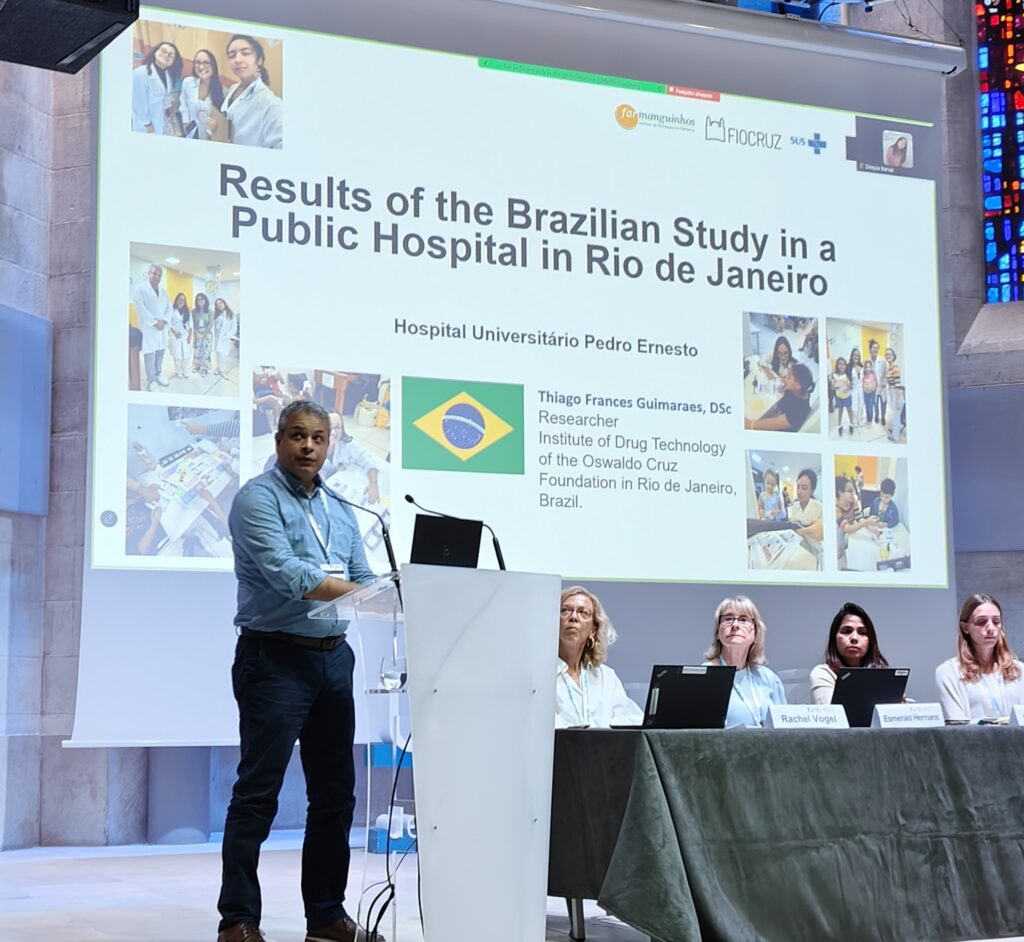
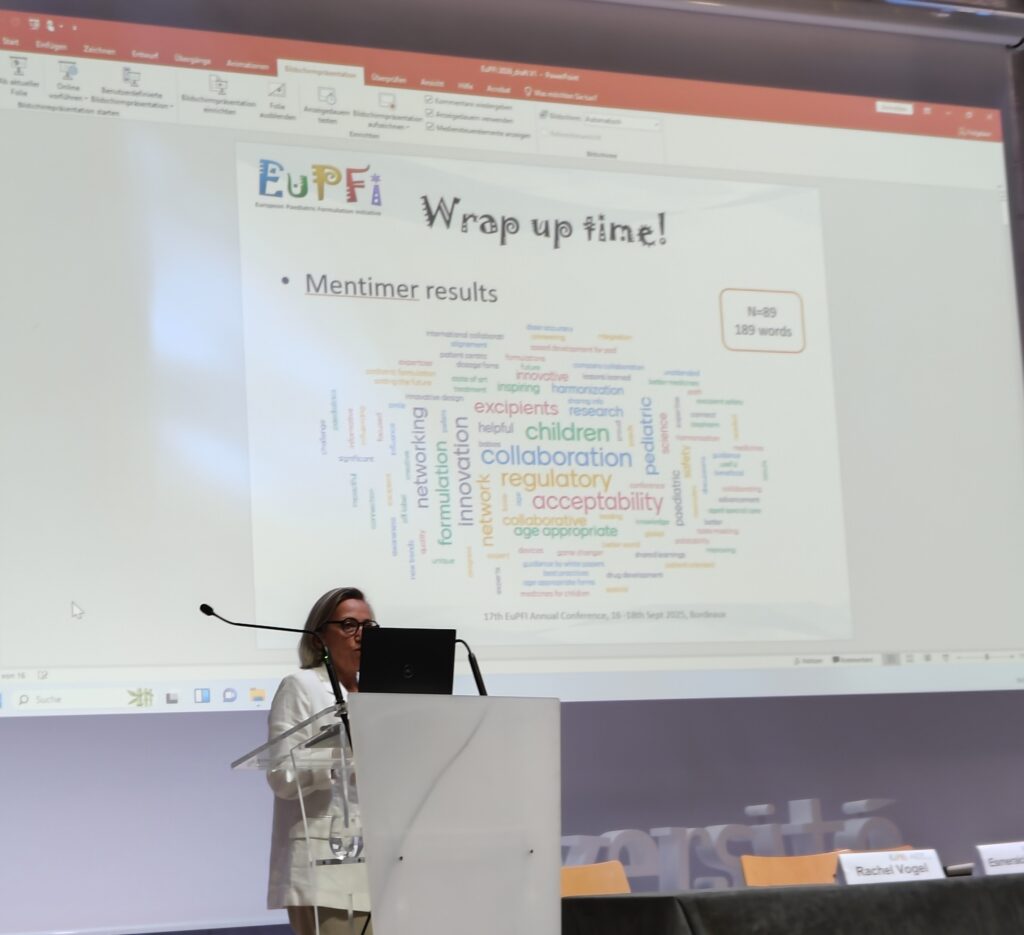
- EuPFI 2025 Picture Gallery
- Contacts
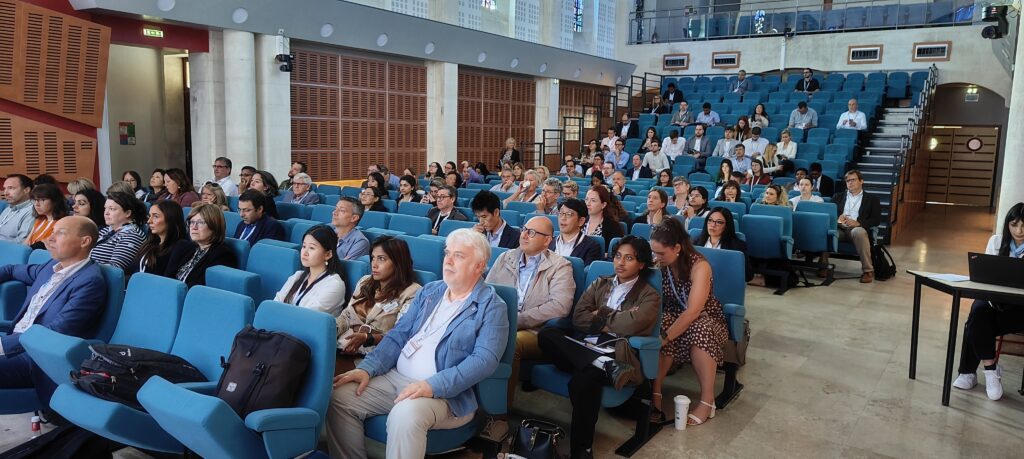
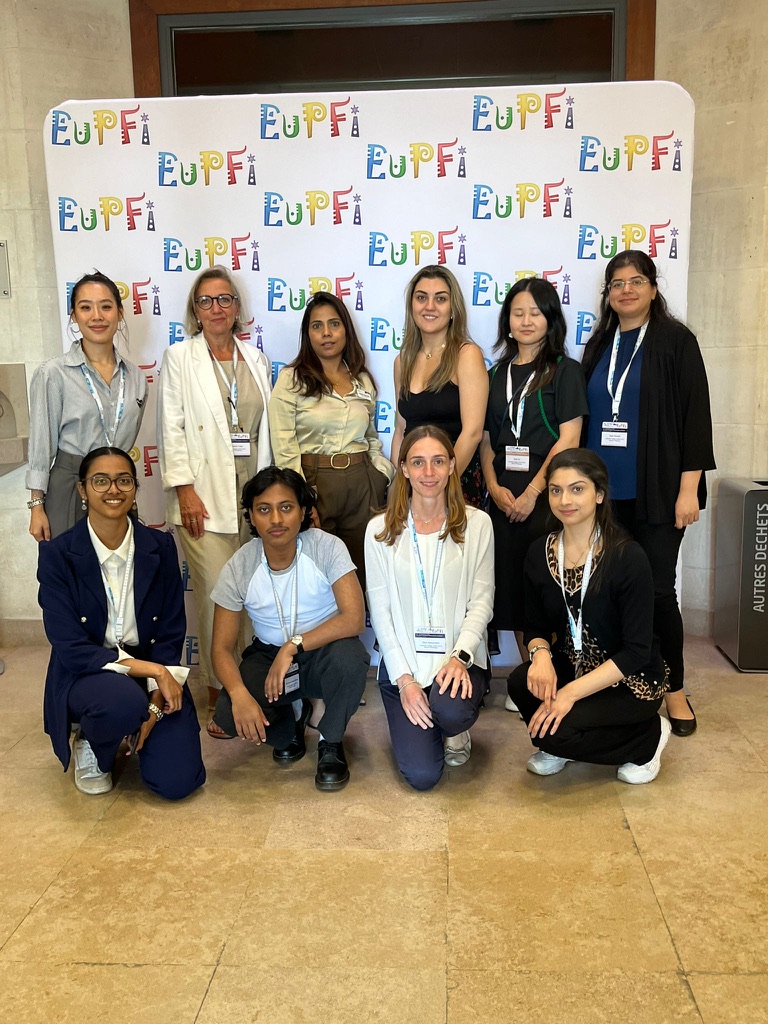
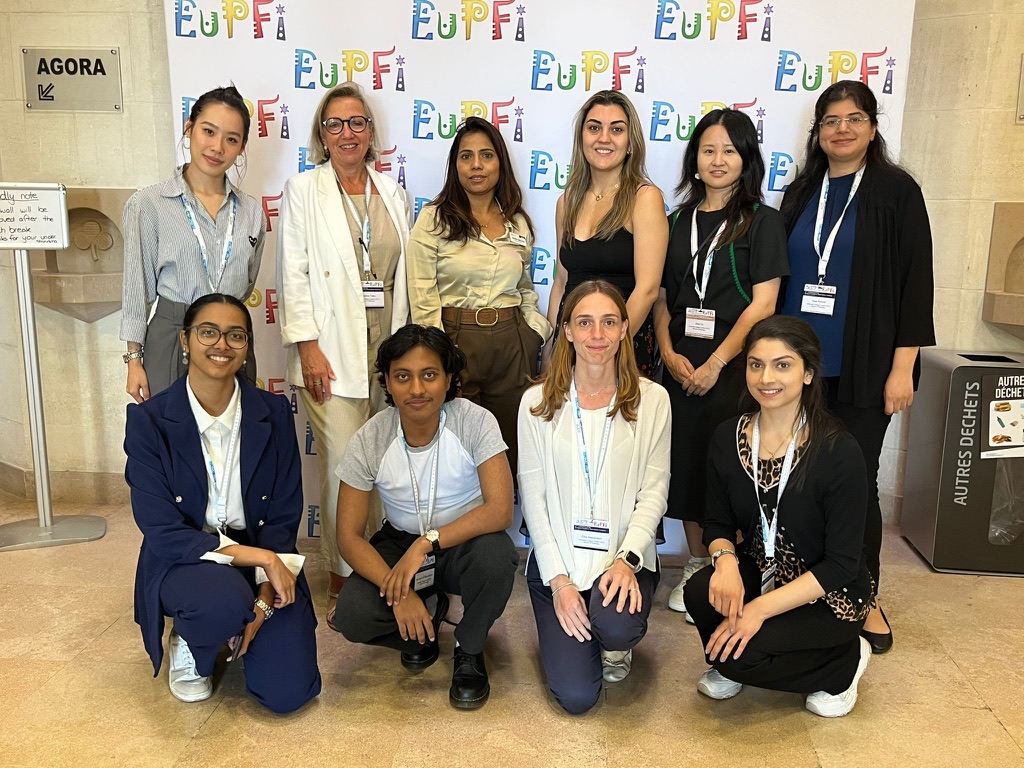
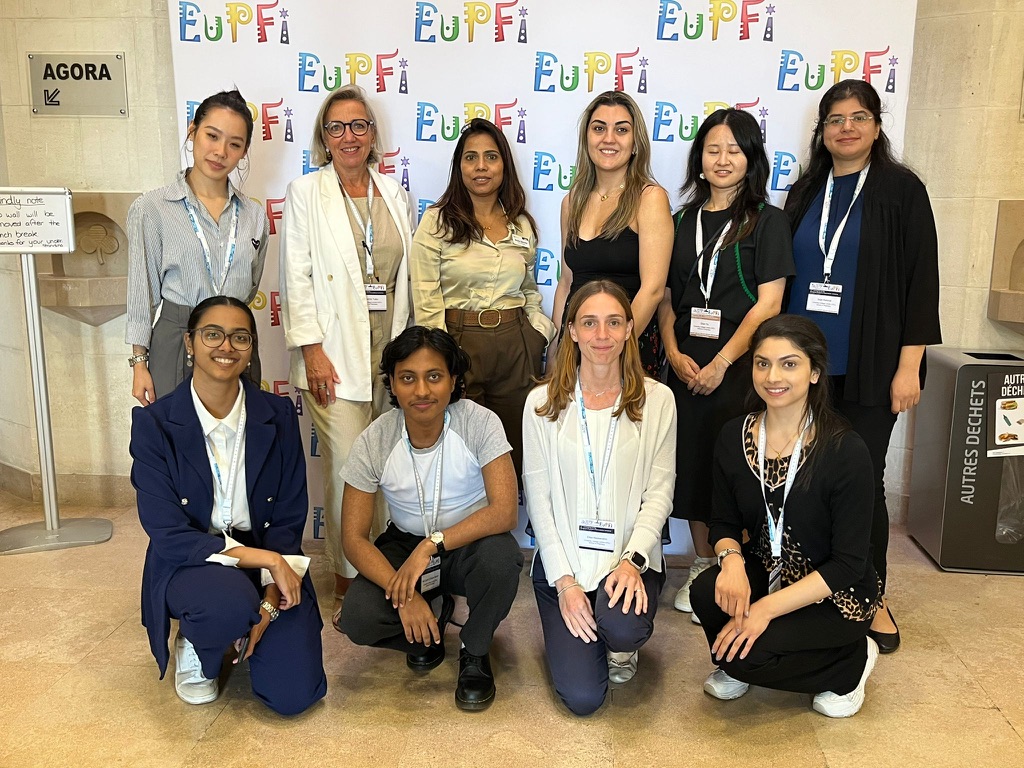
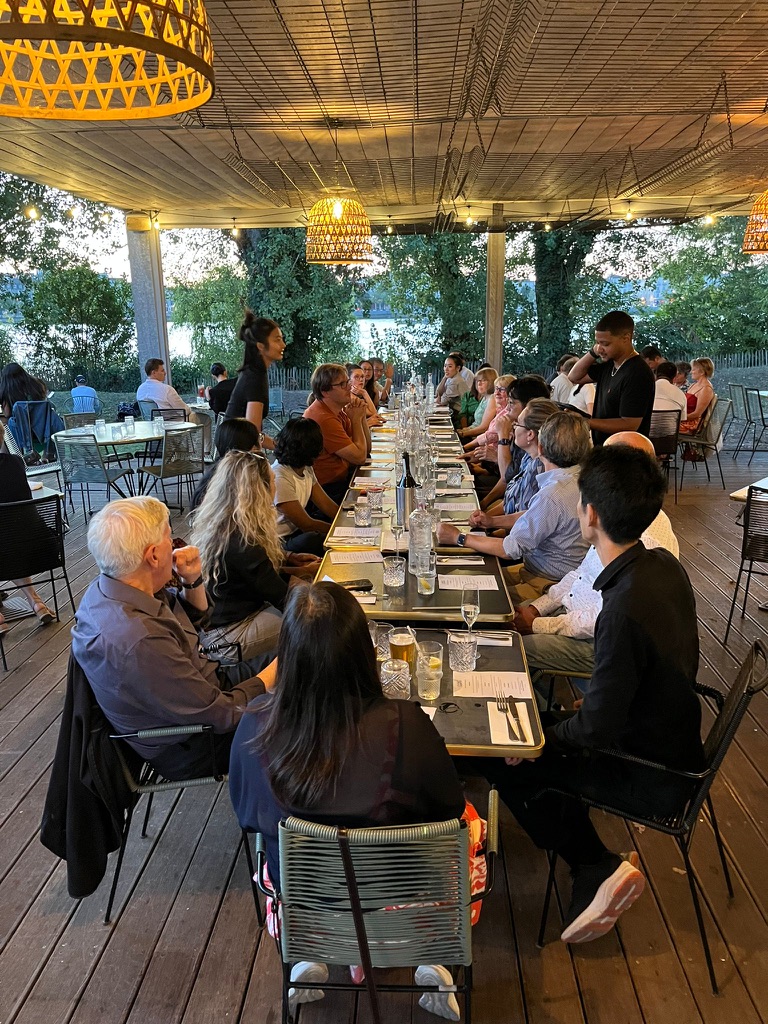
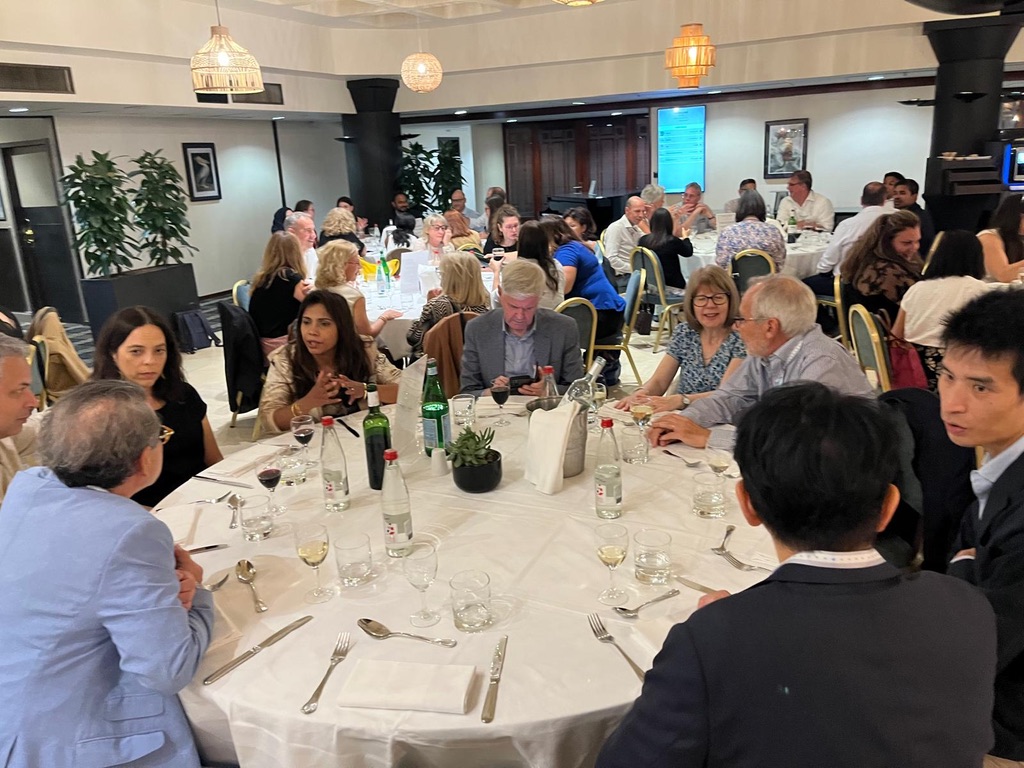
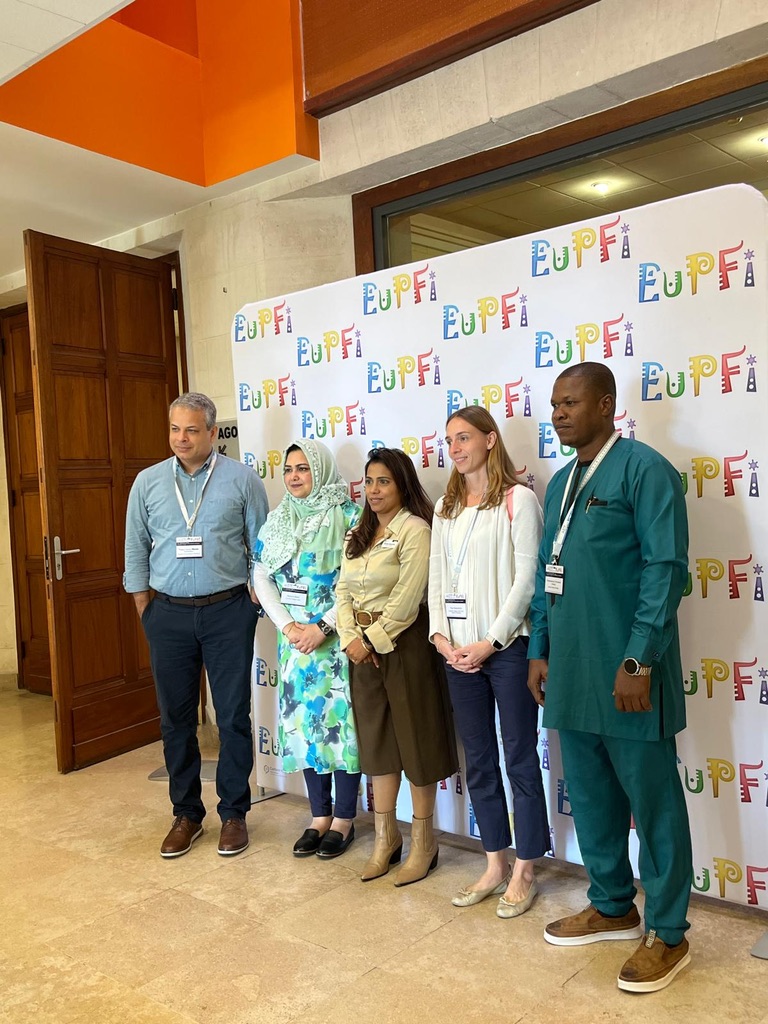
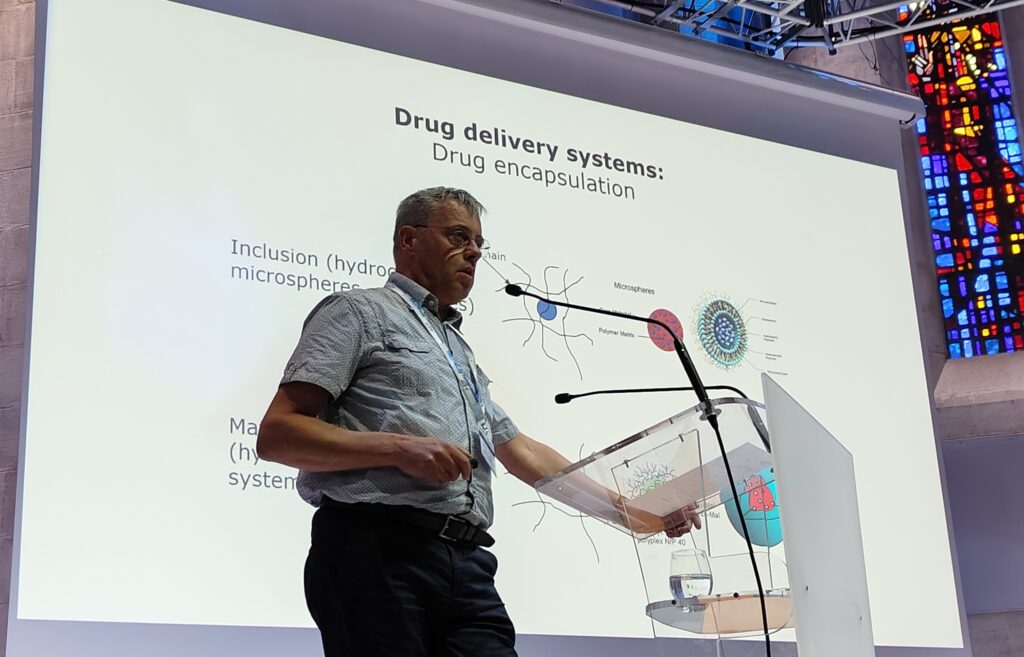
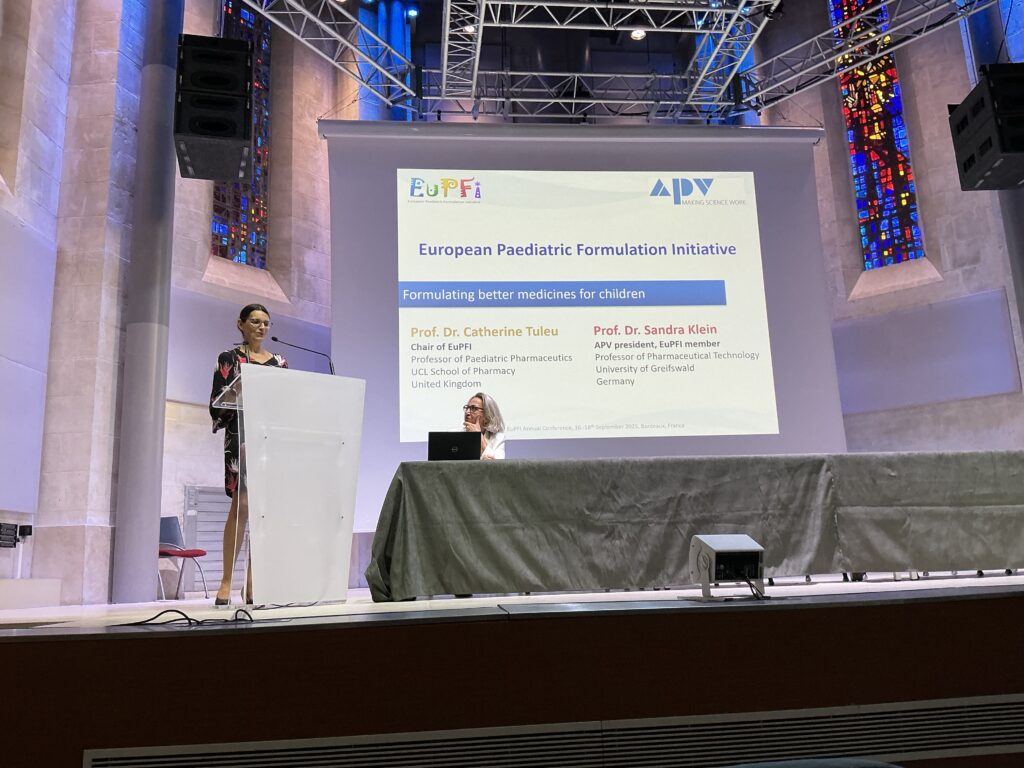
The European Paediatric Formulation Initiative (EuPFI) Conference 2025 on “Formulating Better Medicines for Children”, organized in partnership with the International Association for Pharmaceutical Technology (APV), took place from 16–18 September 2025 in Bordeaux, France.
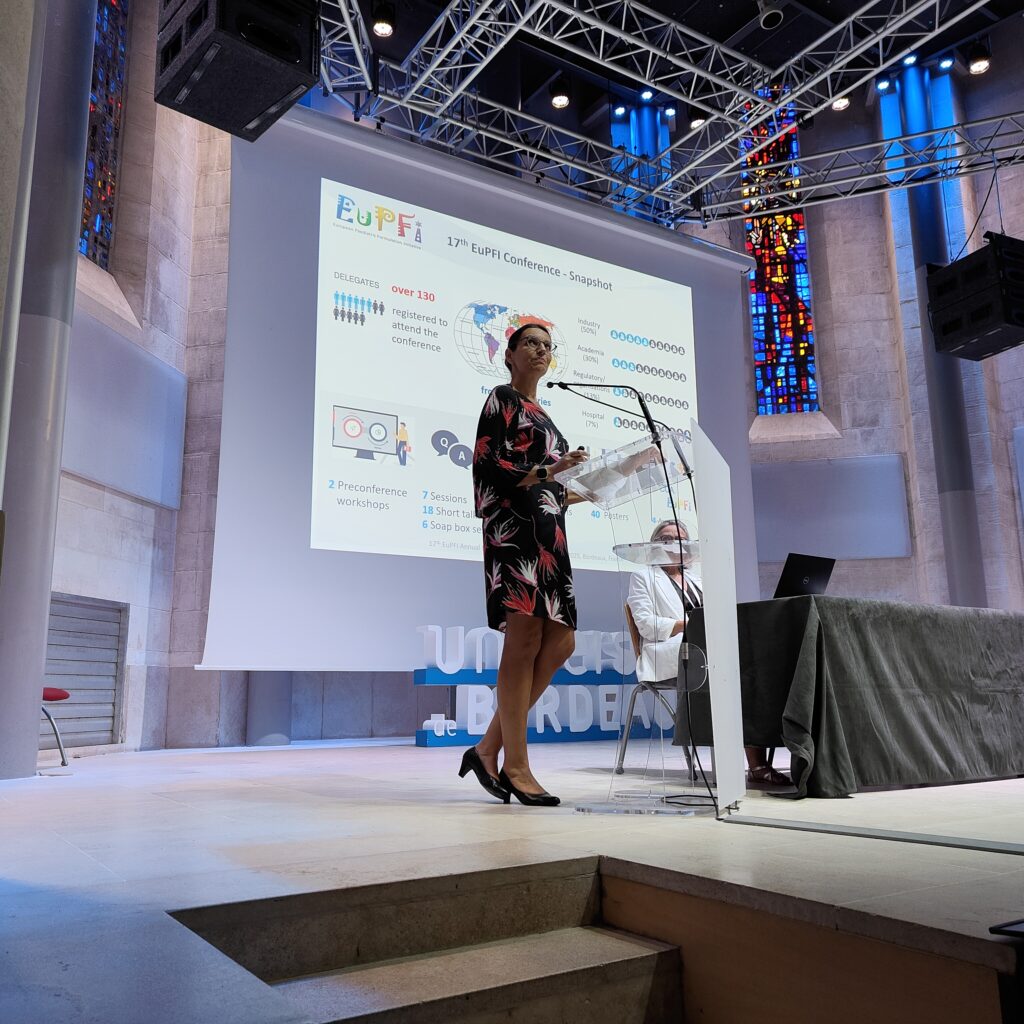
The conference brought together 134 delegates from 21 countries, fostering vibrant discussions on recent innovations and global progress in paediatric medicine development. Renowned scientists delivered inspiring presentations, shedding light on the critical considerations that shape research in paediatric formulations.
EuPFI’s mission is to advance patient-centred drug products tailored for children, and this conference once again served as a dynamic platform for knowledge exchange, collaboration, and innovation. Alongside the presentations, 31 posters were showcased, providing students and early-career scientists with an invaluable opportunity to share their research, ideas, and discoveries.
We extend our heartfelt gratitude to our presenters, sponsors, exhibitors, scientific organizers, session chairs, poster judges, conference secretariat, volunteers, and to all who supported the event. A special thanks goes to our attendees, whose expertise, enthusiasm, and active engagement played a vital role in the success of the conference.
With the momentum of #EuPFI2025, we now look forward to #EuPFI2026. Stay tuned for updates on the dates and venue as we continue the journey towards advancing paediatric formulation research and developing better medicines for children.
Programme
EuPFI 2025 Programme - Click here
Poster Presentations
Posters
ID41: Taste Assessment Study of Bivamelagon (MC72) Paediatric Solution Formulations
Amit Sawant, Quotient Sciences, United Kingdom Srinivasan Shanmugam, Adare Pharma Solutions, United States Lidia Habtemikael, Uppsala University, SwedenID46: Assessing the Stability of Dopamine Neonatal Infusions: A Two-Day Simulated NICU Study
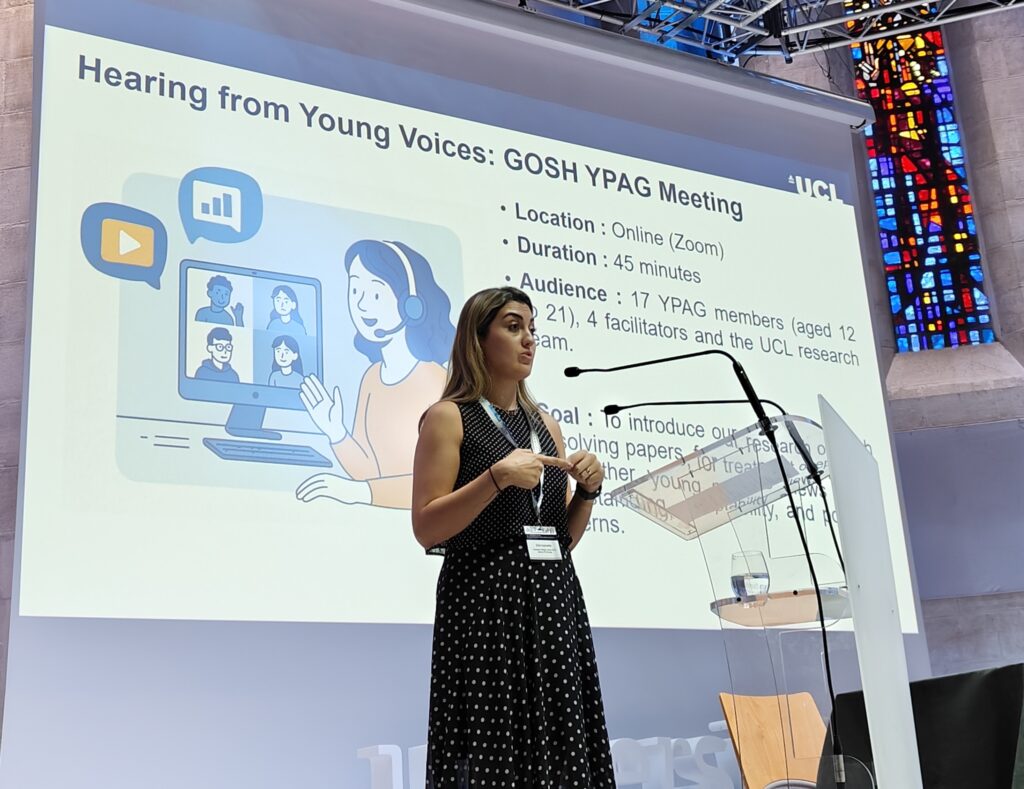
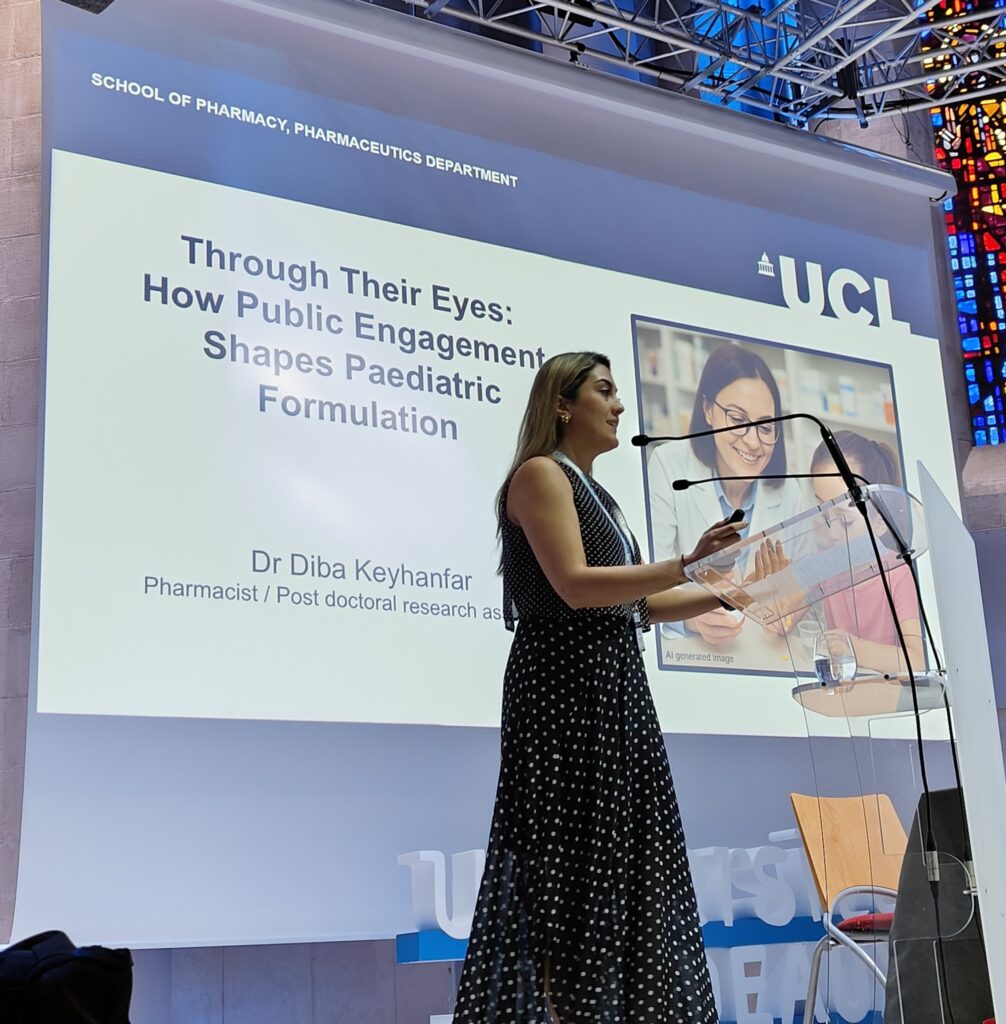
Nancy Moore SSPC, the Research Ireland Centre for Pharmaceuticals, University College Cork, School of Pharmacy, College Road, Cork, T12 YT20, IrelandID47: Through Their Eyes: How Patient and Public Engagement Can Shape Paediatric Formulation
Diba Keyhanfar, UCL, United Kingdom Leonie-Lara Uth, Heinrich Heine University Duesseldorf, GermanyID50: Evaluation of Age-Appropriate Dosing Strategies for Taste Masked Pellets in Infants
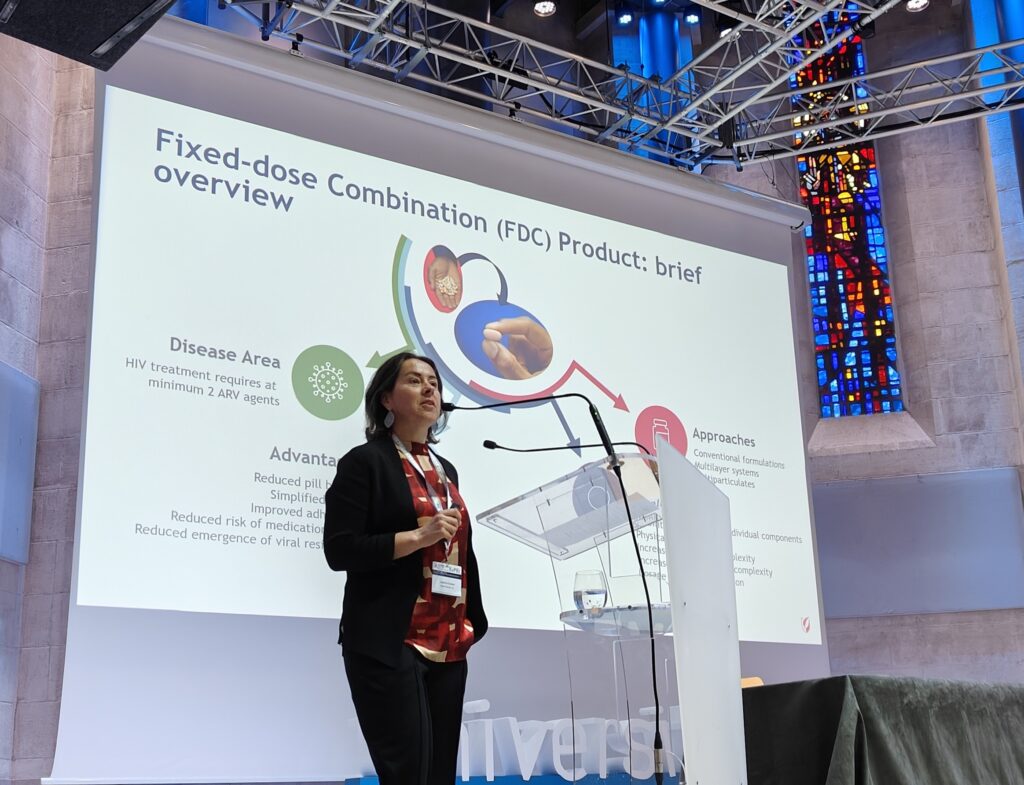
Karthik Neduri, Catalent Schorndorf Germany GmbH, GermanyID51: Unique challenges in development of age-appropriate, fixed-dose combination products
Joanna Koziara, Gilead Sciences, United StatesID52:Behind the scenes of neonates, infants and toddlers' medicine design: the parental narrative
Nicole Sheena Kaneria, University College London, United KingdomID54: 3D-Printed Hydroxyurea for Pediatric Use: Toward Safer and Personalized Drug Administration
Jean Laverdière, University of Montreal, Platform of Biopharmacy, CanadaID55: Development of Bilayer Medicinal Gummies
Emilie poupin, université de bordeaux UFR de pharmacie, France Alessia Menozzi, F.Hoffmann-La Roche, SwitzerlandID57: From “Undevelopable” to Pediatric-Ready: A Stabilized, Palatable Oral Solution Form of Omeprazole
Angela Simovska, Alkaloid AD North, Macedonia Alessia Menozzi, F.Hoffmann-La Roche, SwitzerlandID59: Rats can assess bittersweet formulations
Sejal Ranmal, senCeuTics Ltd / UCL School of Pharmacy, United Kingdom Nikoletta Fotaki, University of Bath, United KingdomID65: Development of a Pediatric Tablet Formulation with Chewable Consistency for SSE 3D Printing
Jonas Hoffmann, Heinrich Heine University Duesseldorf, GermanyID66: Easy Scale-up of Wurster Processes for Pellet Drug Layering and Taste Masking
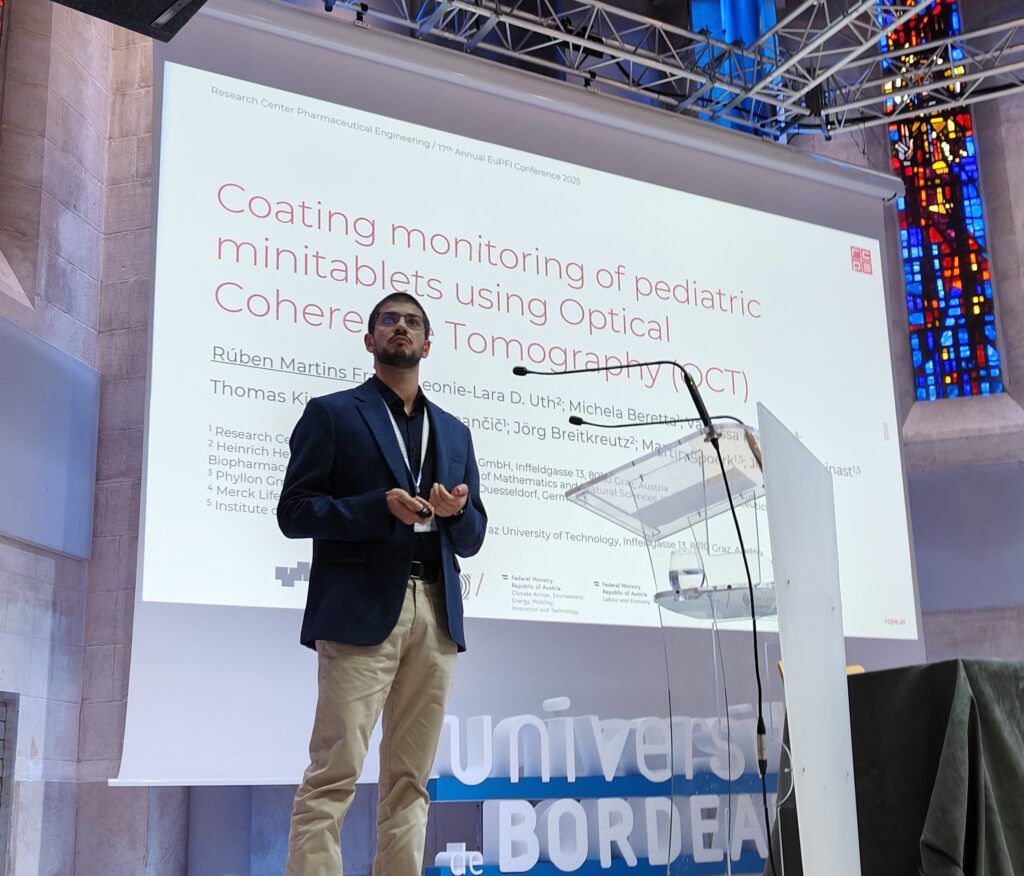
Annette Grave, Glatt Pharmaceutical Services GmbH und Co. KG, GermanyID67: Coating monitoring of paediatric minitablets using Optical Coherence Tomography (OCT)
Rúben Martins Fraga, Research Center Pharmaceutical Engineering GmbH, AustriaID68: Acceptability of age-appropriate furosemide orodispersible tablets (ODTs) in the paediatric population
Maisie Stephenson, Proveca Ltd, United Kingdom Albert Poortinga, Utrecht University, NetherlandsID71: Children’s perspectives on the colour of oral medicines, preliminary results from an online survey
Elisa Alessandrini, University College London, School of Pharmacy, United Kingdom Sifan Hu, UCL School of Pharmacy, United KingdomID74: Unlocking Pharmaceutical Knowledge: AI-Enabled Structured Data Extraction
Sifan Hu, UCL School of Pharmacy, United KingdomID78: Electronic tongue Evaluation of Taste-Masking Strategies for Docusate Sodium Lollipops
Xiunan Li, University College London, United KingdomID79: Qualitative and quantitative sensory evaluation of primaquine granules for low-resource countries
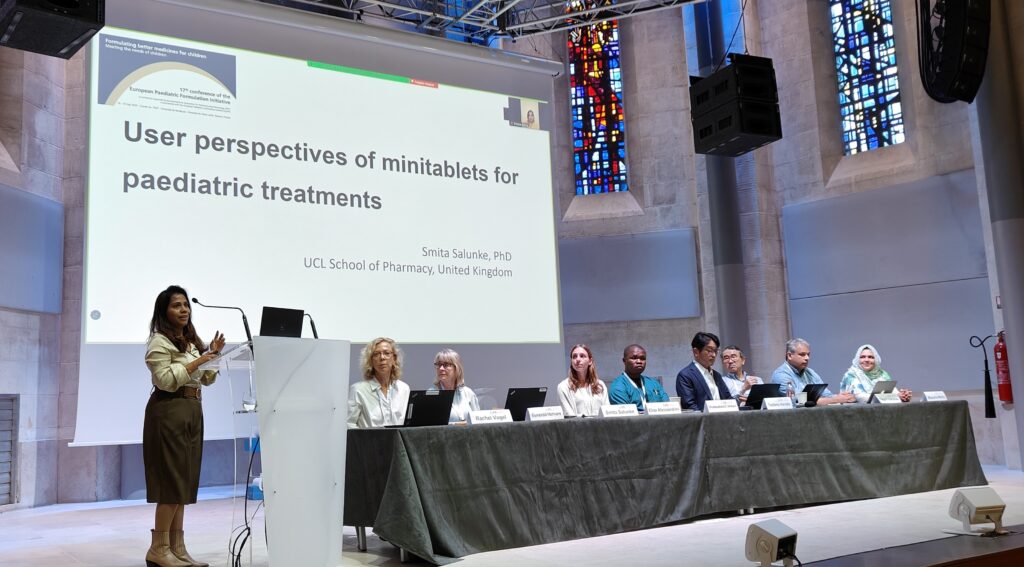
Sejal Ranmal, UCL School of Pharmacy, University College London, United Kingdom Thibault VALLET, ClinSearch, FrancePoster ID 2540: User perspective of minitablets for paediatric treatments in Nigeria
Poster ID 2541: User perspective of minitablets for paediatric treatments in Bangladesh
Poster ID2542: User perspective of minitablets for paediatric treatments in Brazil Thiago Guimarães, Fundação Oswaldo Cruz, Brazil Poster ID 2540: User perspective of minitablets for paediatric treatments in UKSoapbox Session Presentations
Microbubble-encapsulation of actives for controlled release and its application to the taste-masking of acetaminophen
Albert Poortinga, Utrecht University, Netherlands
Acceptability of age-appropriate furosemide orodispersible tablets (ODTs) in the paediatric population
Maisie Stephenson, Proveca Ltd, United Kingdom
Through Their Eyes: How Patient and Public Engagement Can Shape Paediatric Formulation
Diba Keyhanfar, University College London School of Pharmacy, United Kingdom
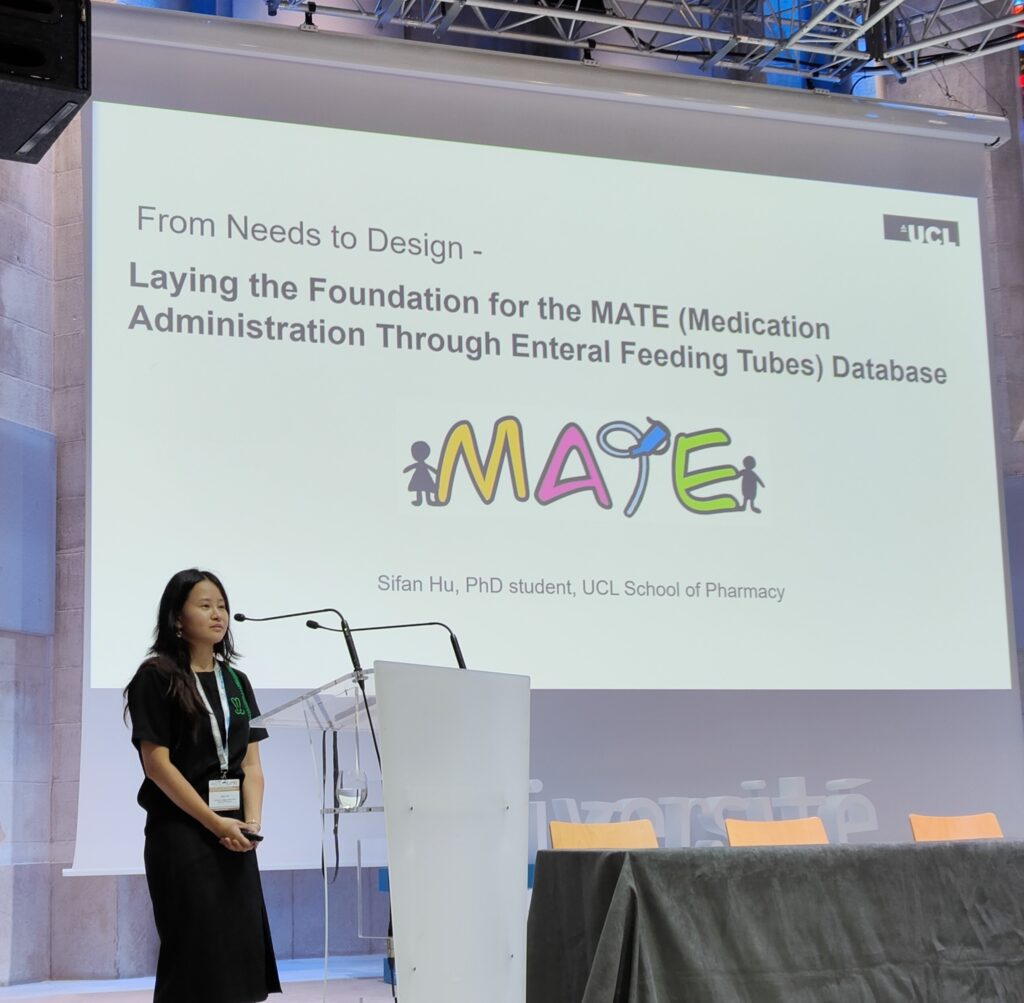
From Needs to Design: Laying the Foundation for the MATE (Medication Administration Through Enteral Feeding Tubes) Database
Sifan Hu, UCL School of Pharmacy, United Kingdom
Coating monitoring of paediatric minitablets using Optical Coherence Tomography (OCT)
Rúben Martins Fraga, Research Center Pharmaceutical Engineering GmbH, Austria
Unique challenges in development of age-appropriate, fixed-dose combination products
Joanna Koziara, Gilead Sciences, United States
Session Presentations
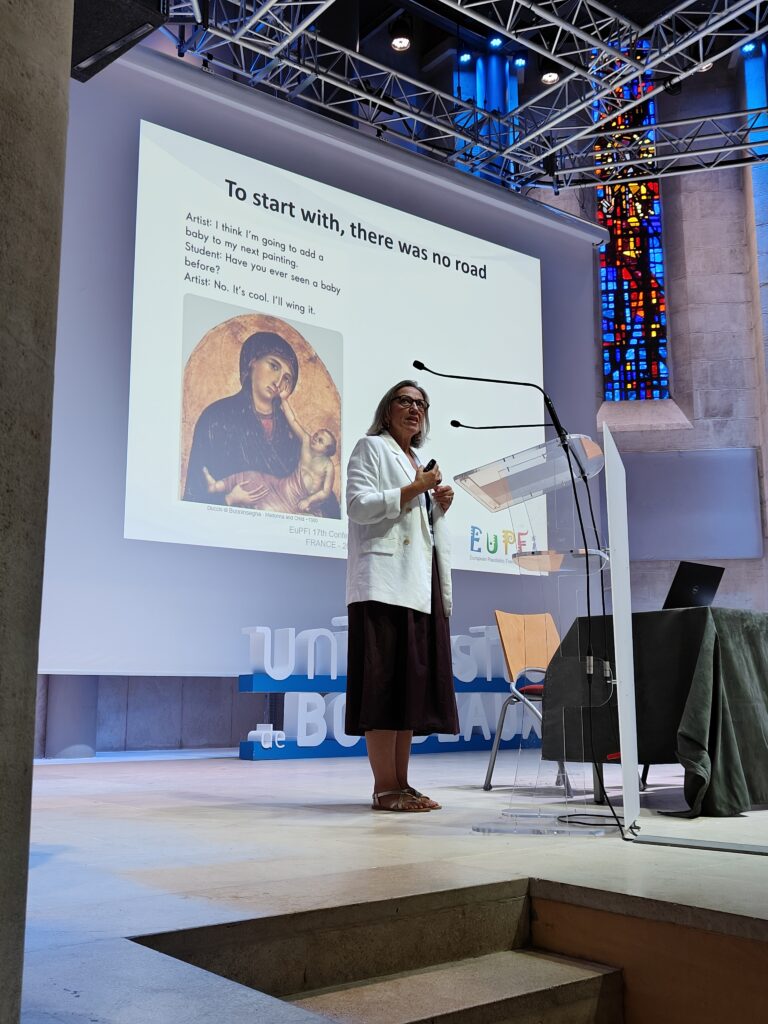
Paediatric Drug Development: The Road we‘ve Traveled, The Future we BuildCatherine Tuleu, University College London, School of Pharmacy, United Kingdom
Carsten Timpe, Consultant, Germany
Regulatory perspectives with case studies
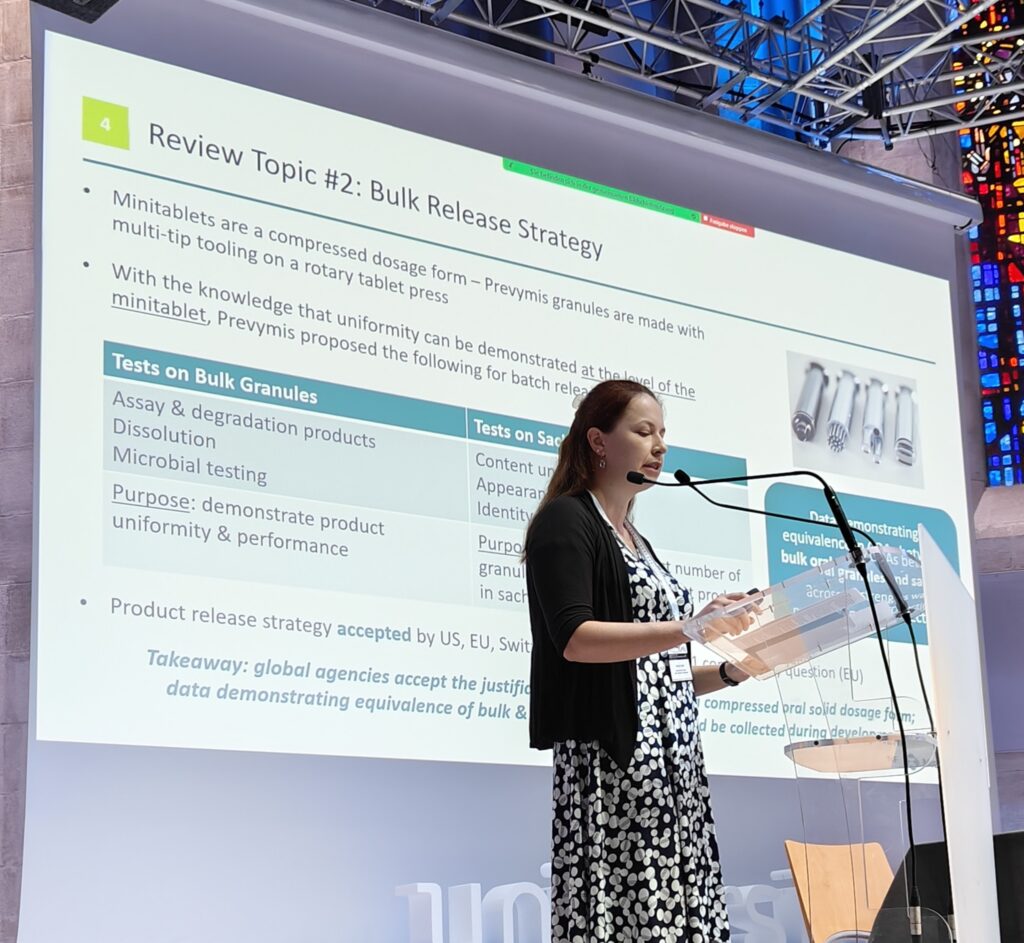
Minitablet regulatory perspective: lesson learned from PREVYMIS pediatric approvalNicole Devitt Fisher, MSD, United States
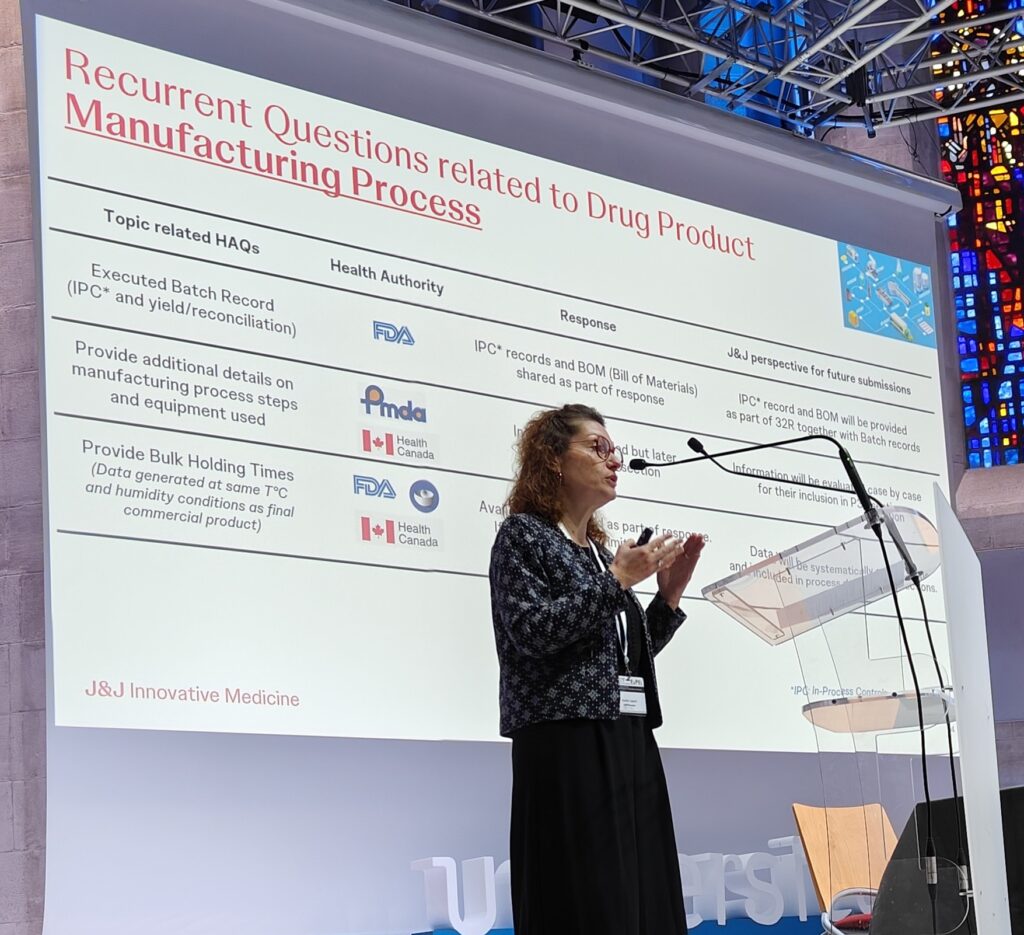
Lessons learned from recent J&J Paediatric Products Marketing Applications
Aurélia Lappert, Johnson and Johnson Innovative Medicine, Belgium
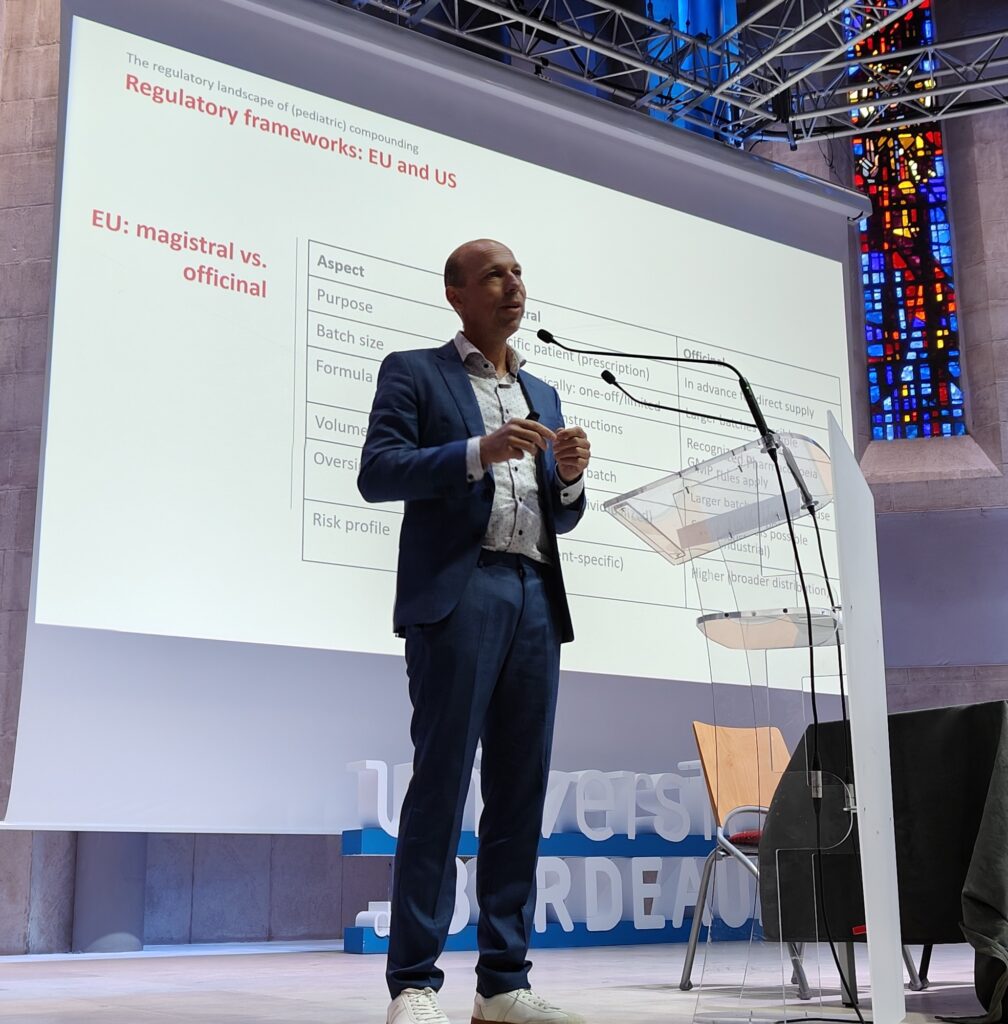
Tailored Solutions for paediatric Compounding: Minitablets, Suspensions, and Orodispersible Films
Eli Dijkers, Fagron, Netherlands
Real-World Insights
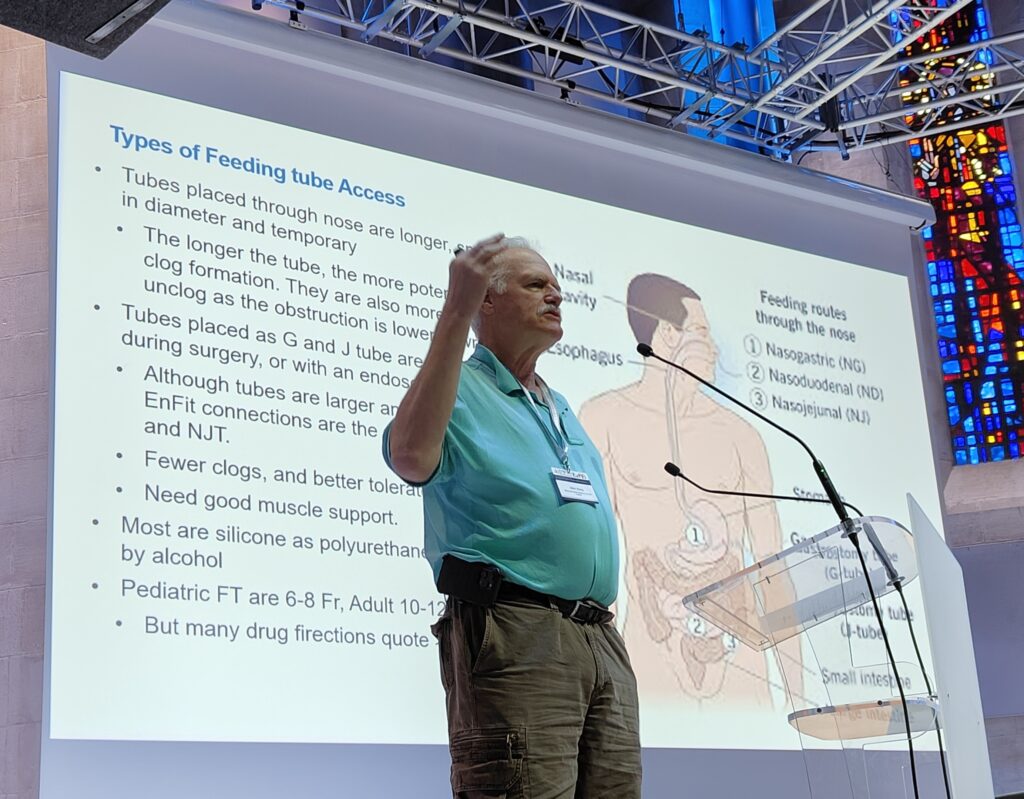
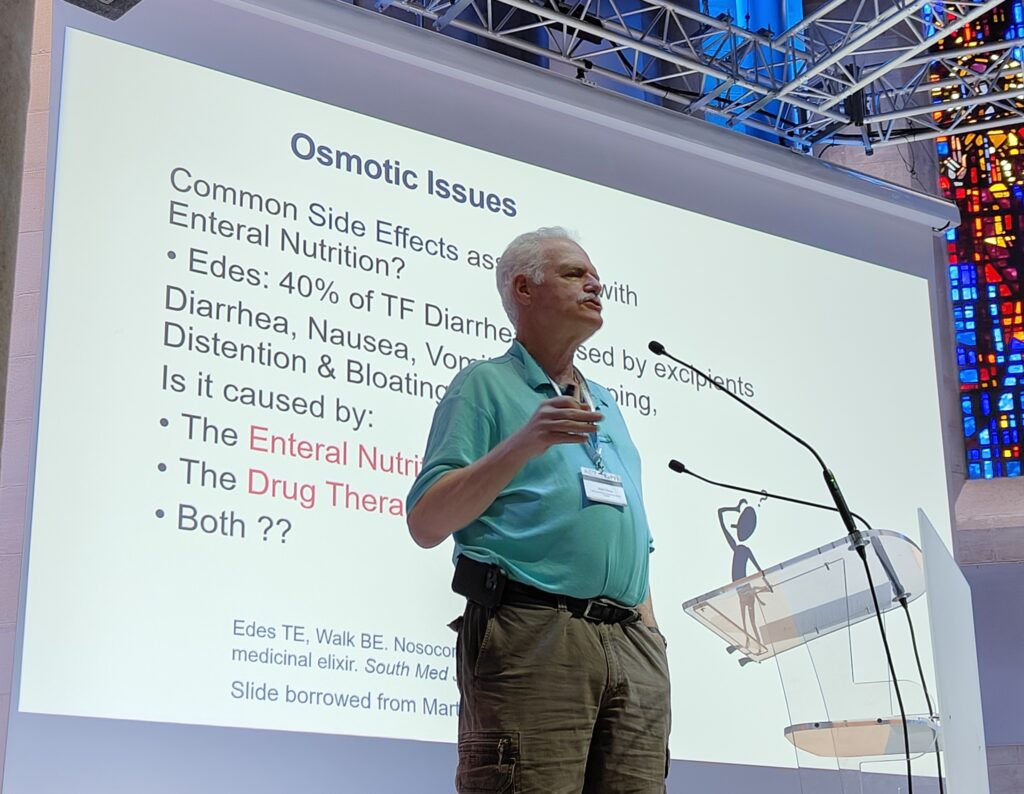
Developing procedures for Paediatric Enteral Feeding tube administration of medication in a cancer hospital
Mark Klang, Memorial Sloan Kettering Cancer Center, United States
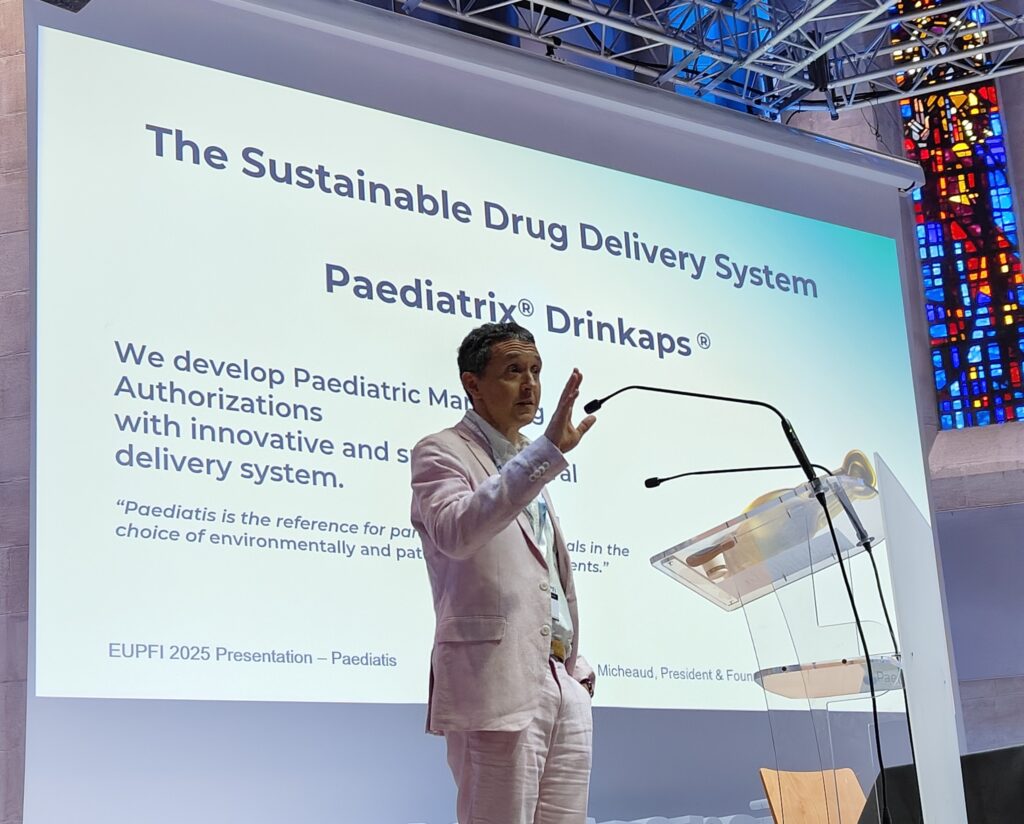
Paediatrix® Delivery System
Nicolas Micheaud, Paediatis Pharma, France
Taste matters!
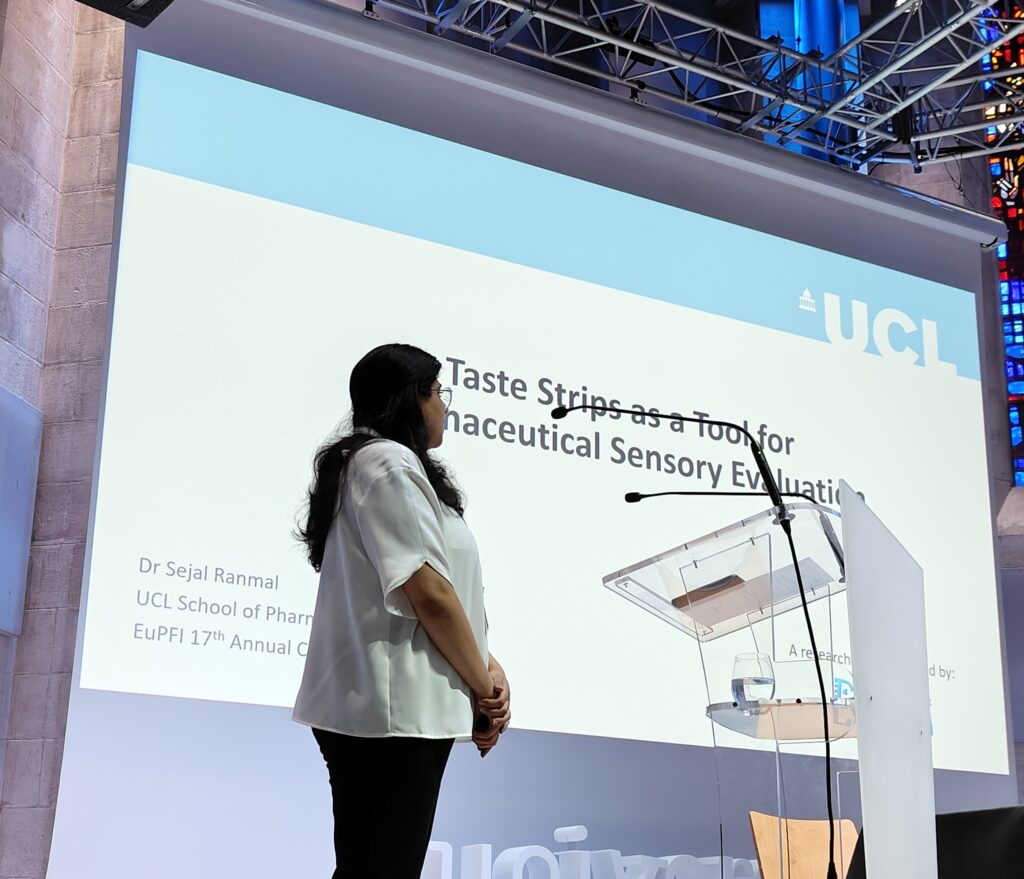
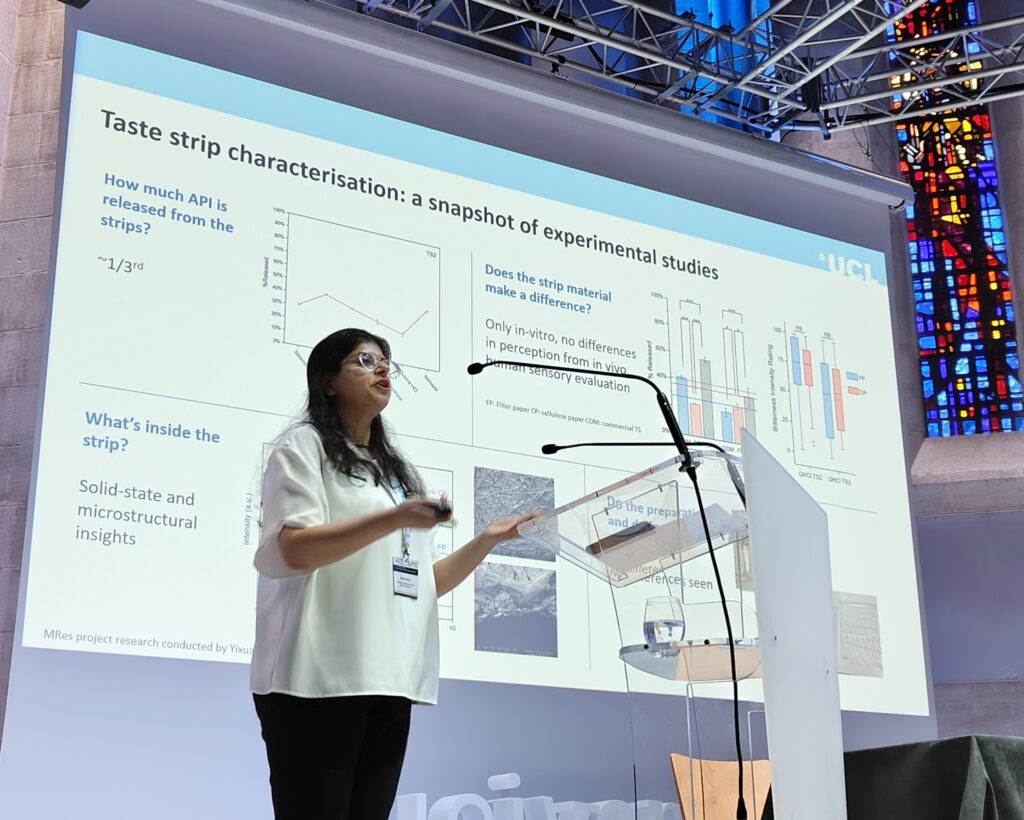
Taste Strips as a Tool for Pharmaceutical Sensory EvaluationSejal Ranmal, UCL School of Pharmacy, United Kingdom
Bitter Molecules-TAS2R docking
Samar Issa and Jad Eid, Ecole de Biologie Industrielle, France
Non-oral
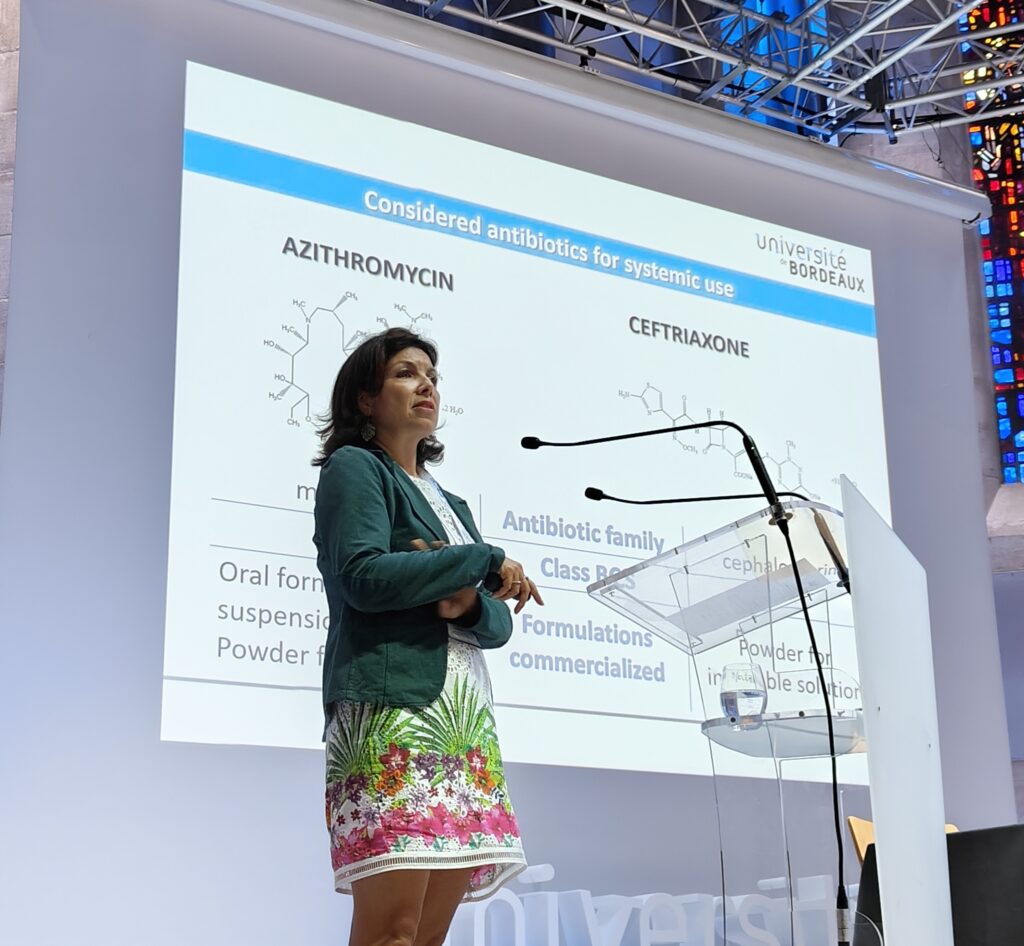
Clinical, Pharmaceutical and Industrial/Commercial Considerations for Paediatric Rectal Drug Formulations developmentTina Kauss, Université de Bordeaux, France Pascal Millet, ReMeD - Remedies and Development Network (Réseau Médicaments et Développement), France
Preconference Workshop Presentations
Beginners Workshop
Paediatric Formulation Roadmap –Points to consider & strategies to choose
Chair: David Clapham, Independent Consultant
Panel Members:
Sandra Klein, University of Greifswald
Anne-Marie Lhéritier, FRM GaleSens
Amiee Allen, IPEC
Carsten Timpe, NGT Biopharma Consultants
Catherine Tuleu, UCL School of Pharmacy
Jenny Walsh, Jenny Walsh Consulting Ltd
Advanced Workshop
Navigating Excipients Risk with Paediatric Excipient Risk Assessment (PERA) Tool
Chair: Smita Salunke, EuPFI (European Paediatric Formulation Initiative), University College London, United Kingdom
Moderators: Daniel Schaufelberger, Johns Hopkins University, School of Medicine, Schaufelberger Consulting LLC, USA;
Kevin Hughes, Colorcon, IPEC Europe, United Kingdom
Panel session:
Chair: Daniel Schaufelberger, Johns Hopkins University, School of Medicine, Schaufelberger Consulting LLC, USA;
Panel members:
April Braddy, U.S. Food and Drug Administration, USA
Terry Ernest, Almac Pharma Services, United Kingdom
Rachel Vogel, Sanofi, France
Philippe Tschopp, Glatt Pharmaceutical Services GmbH & Co. KG, Germany
Hidefumi Nakamura, NCCHD, Academy of Pharmaceutical Sciences and Technology, Japan
Andrea Gill, Neonatal Paediatric Pharmacists Group, United Kingdom
Smita Salunke, EuPFI (European Paediatric Formulation Initiative), University College London, United Kingdom
Kevin Hughes, Colorcon, IPEC Europe, United Kingdom
Focus Session Presentations
• The Paediatric Medicine Journey: From Priority Setting to Access for Patients
Janice Lee, Drugs for Neglected Diseases initiative (DNDi), Switzerland
Terry Ernest, Almac Pharma Services, United Kingdom
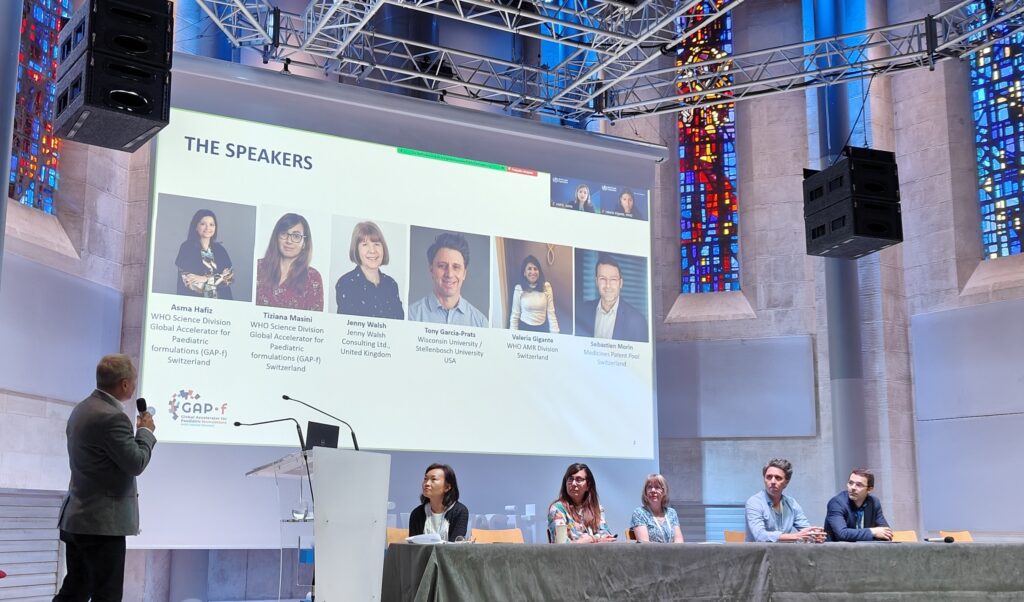
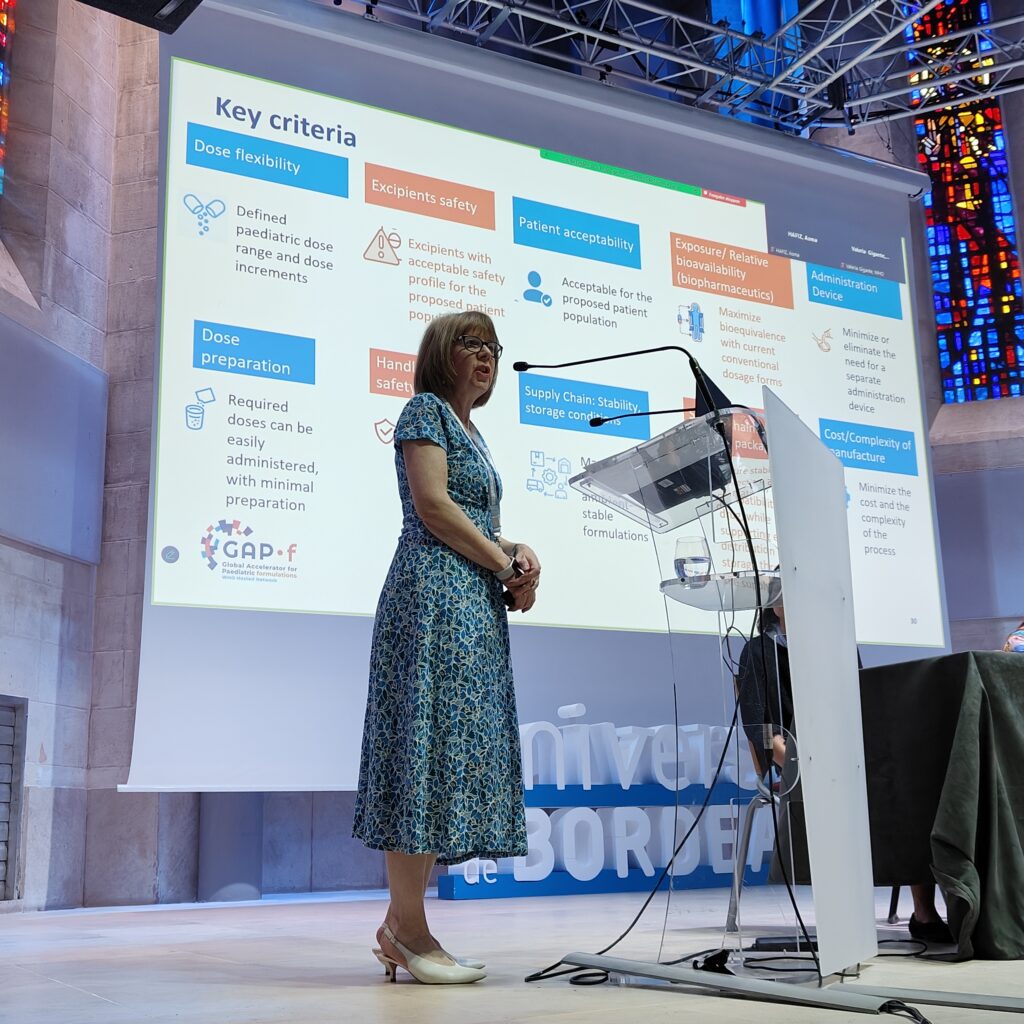
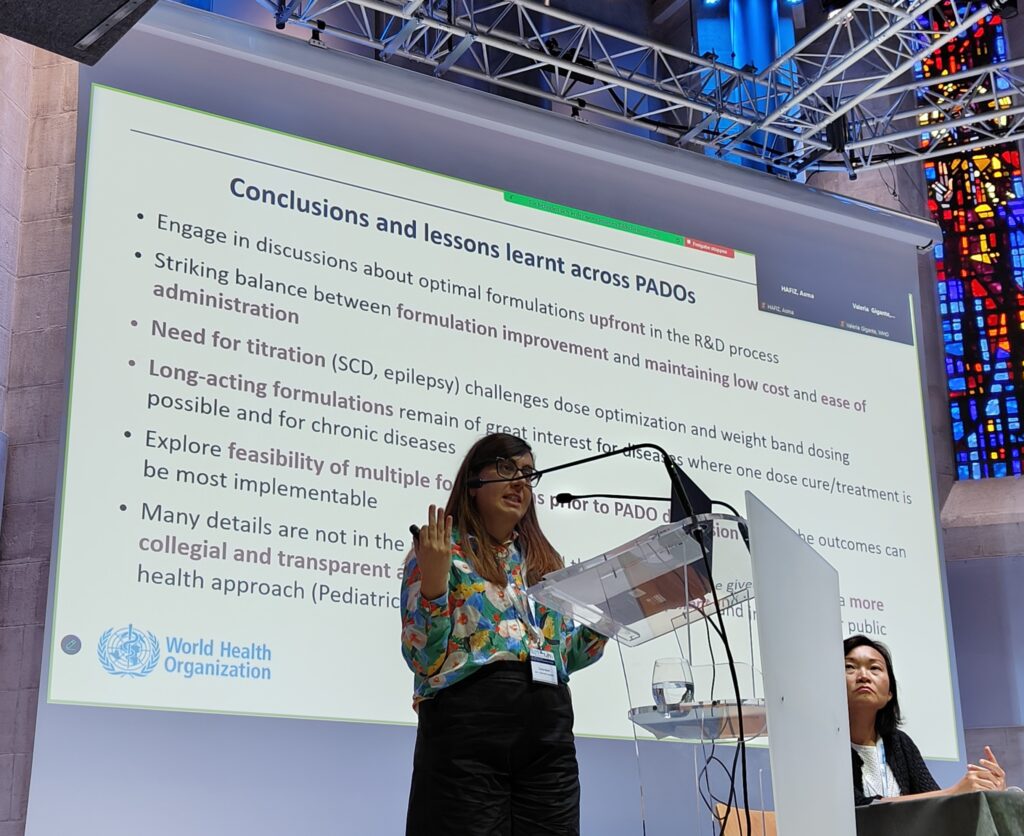
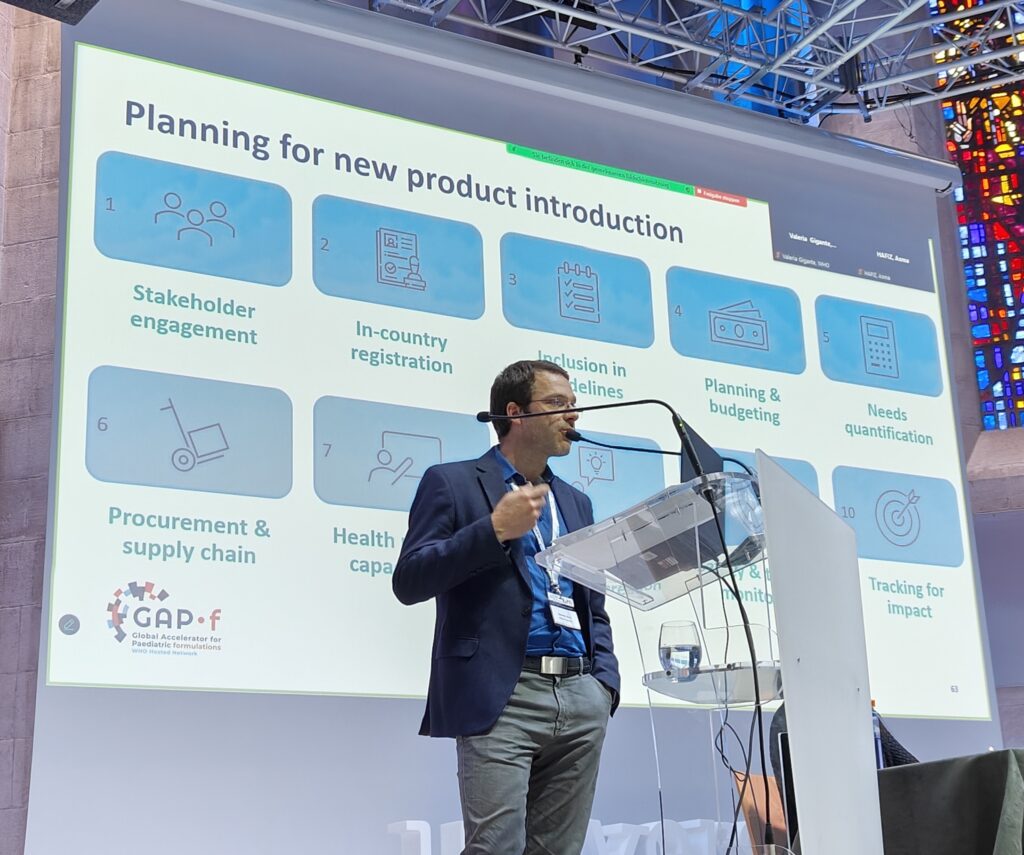
The Global Accelerator for Paediatric formulations (GAP-f): A coordinated approach to foster paediatric
medicines development
Asma Hafiz, WHO Science Division, Global Accelerator for Paediatric formulations (GAP-f), Switzerland
Tiziana Masini, WHO Science Division, Global Accelerator for Paediatric formulations (GAP-f), Switzerland WHO Target Product Profiles (TPPs) for PADO Cancer Medicines: Development and Application of a Tool to facilitate Age-Appropriate Oral Dosage Form Selection
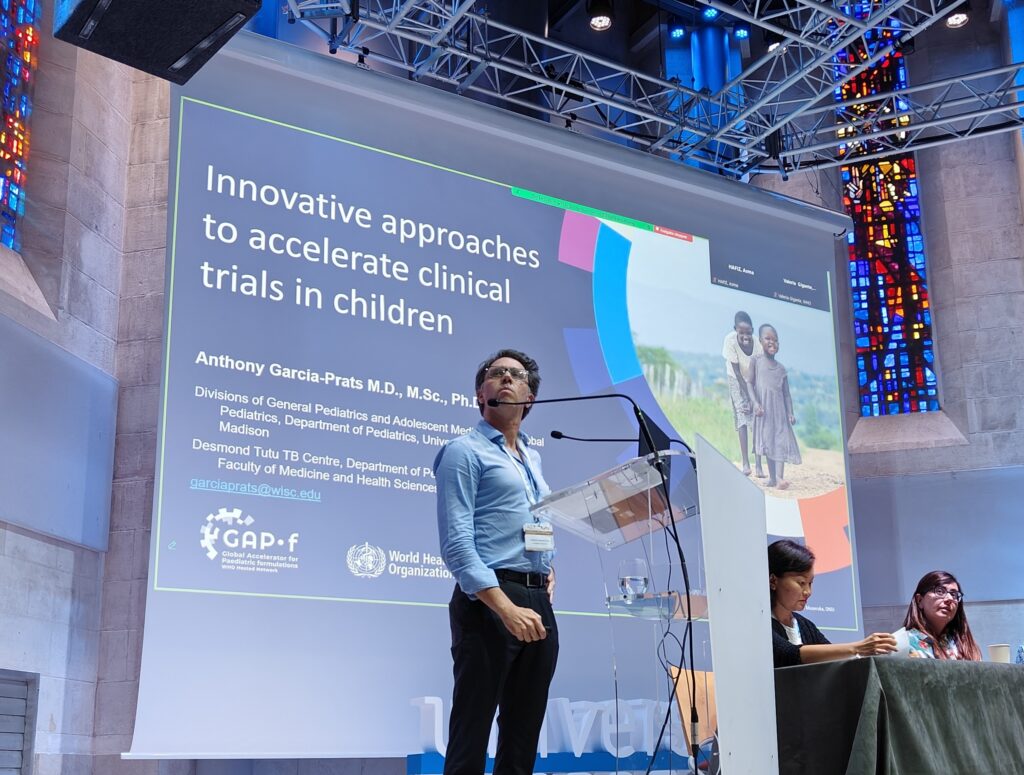
Jenny Walsh, Jenny Walsh Consulting Ltd., United Kingdom Innovative approaches to accelerate clinical trials in children
Tony Garcia-Prats, Wisconsin University / Stellenbosch University, United States Accelerating optimal approval of priority formulations for antibiotic use in children
Valeria Gigante, WHO AMR Division, Switzerland Getting optimal medicines to children: What does access really mean
Sebastien Morin, Medicines Patent Pool, Geneva
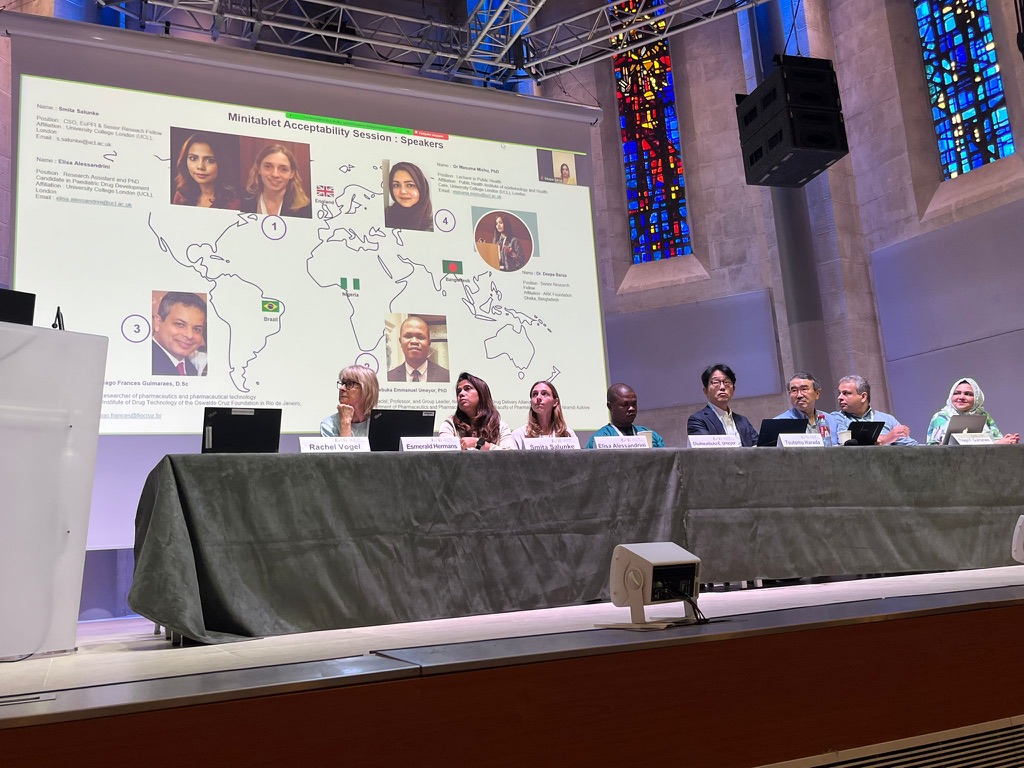
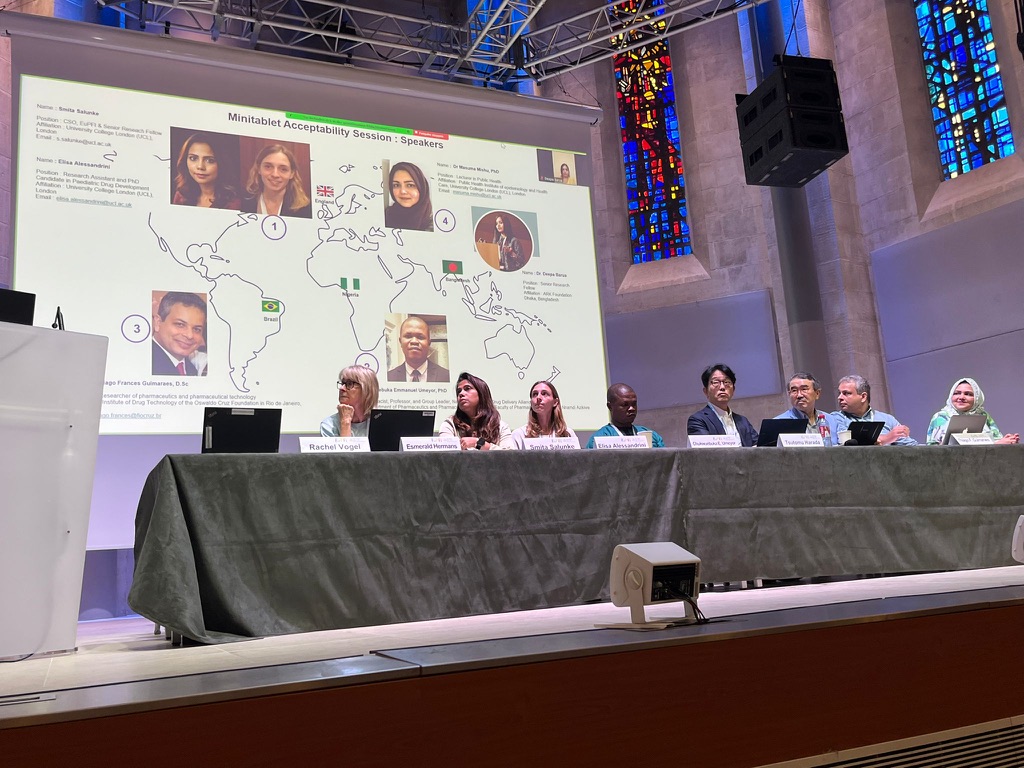
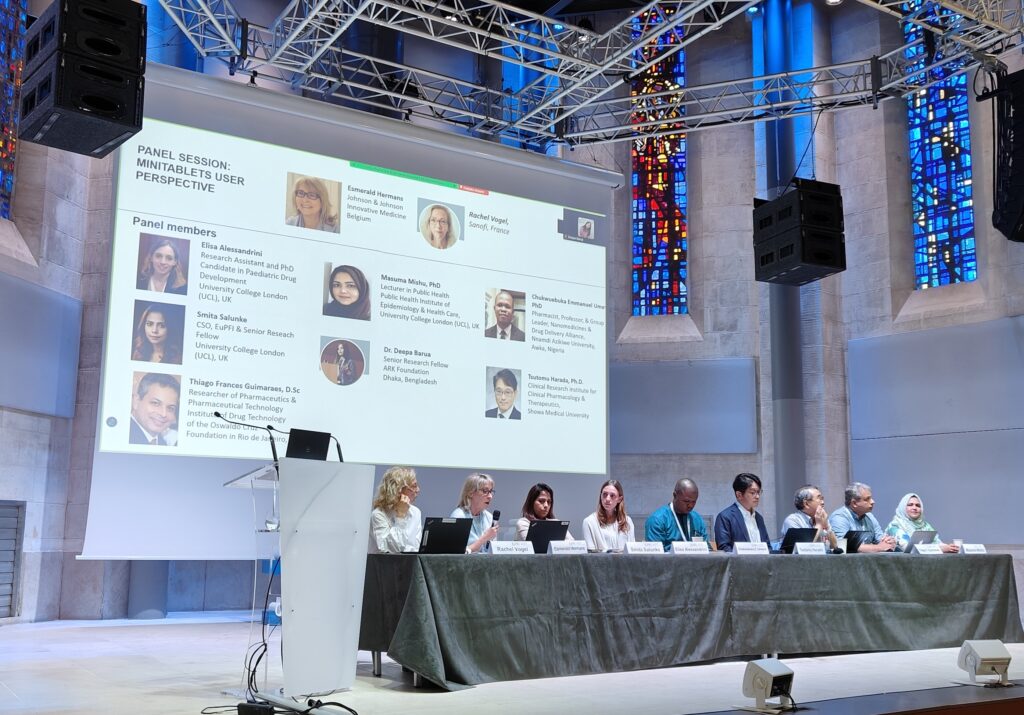
• Minitablet acceptability – Hear it from users!
Esmerald Hermans, Johnson and Johnson Innovative Medicines, Belgium
Rachel Vogel, Sanofi, France
Snapshot of global landscape on the use of minitablets for paediatric treatment
Smita Salunke, UCL School of Pharmacy, United Kingdom
Panelists
Smita Salunke, UCL School of Pharmacy, United Kingdom
Elisa Alessandrini, UCL School of Pharmacy, United Kingdom
Thiago Frances Guimaraes, Fundação Oswaldo Cruz, Brazil
Deepa Barua, ARK Foundation, Bangladesh
Chukwuebuka Emmanuel Umeyor, Nnamdi Azikiwe University, Nigeria
PCCA Award Winners
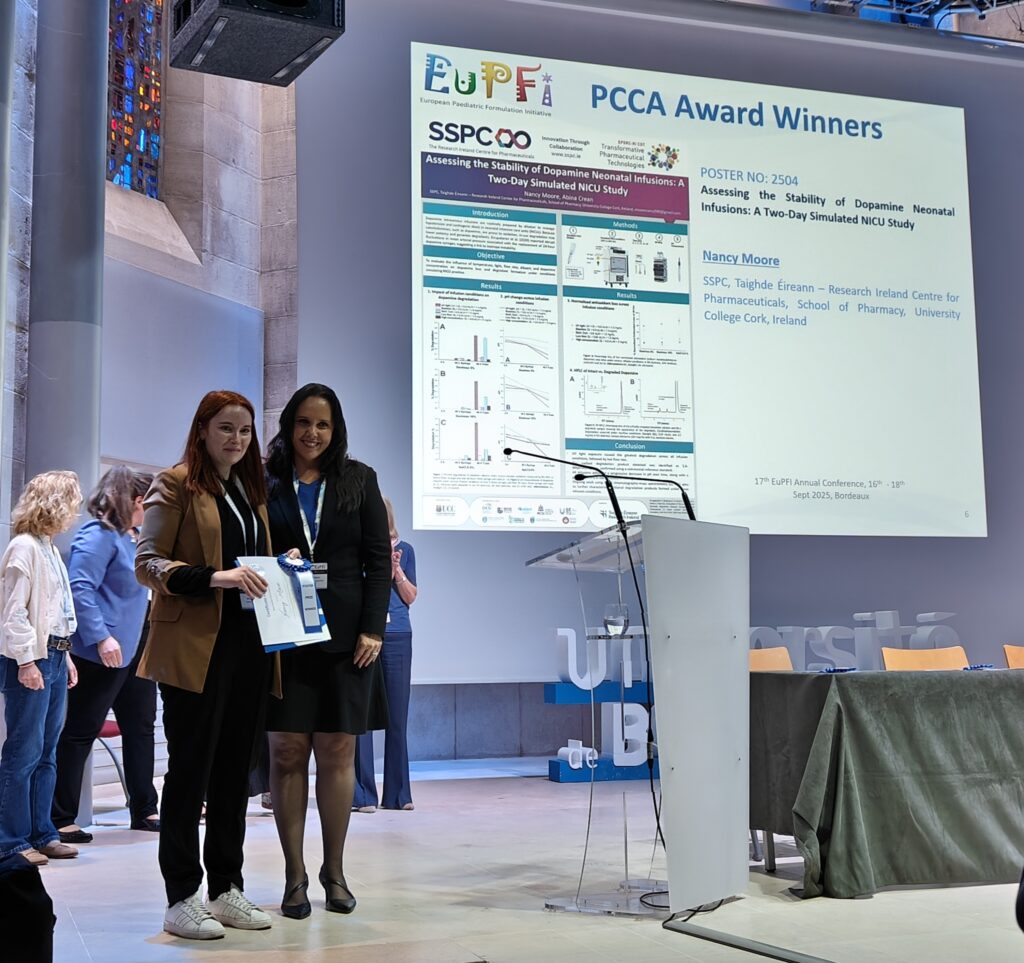
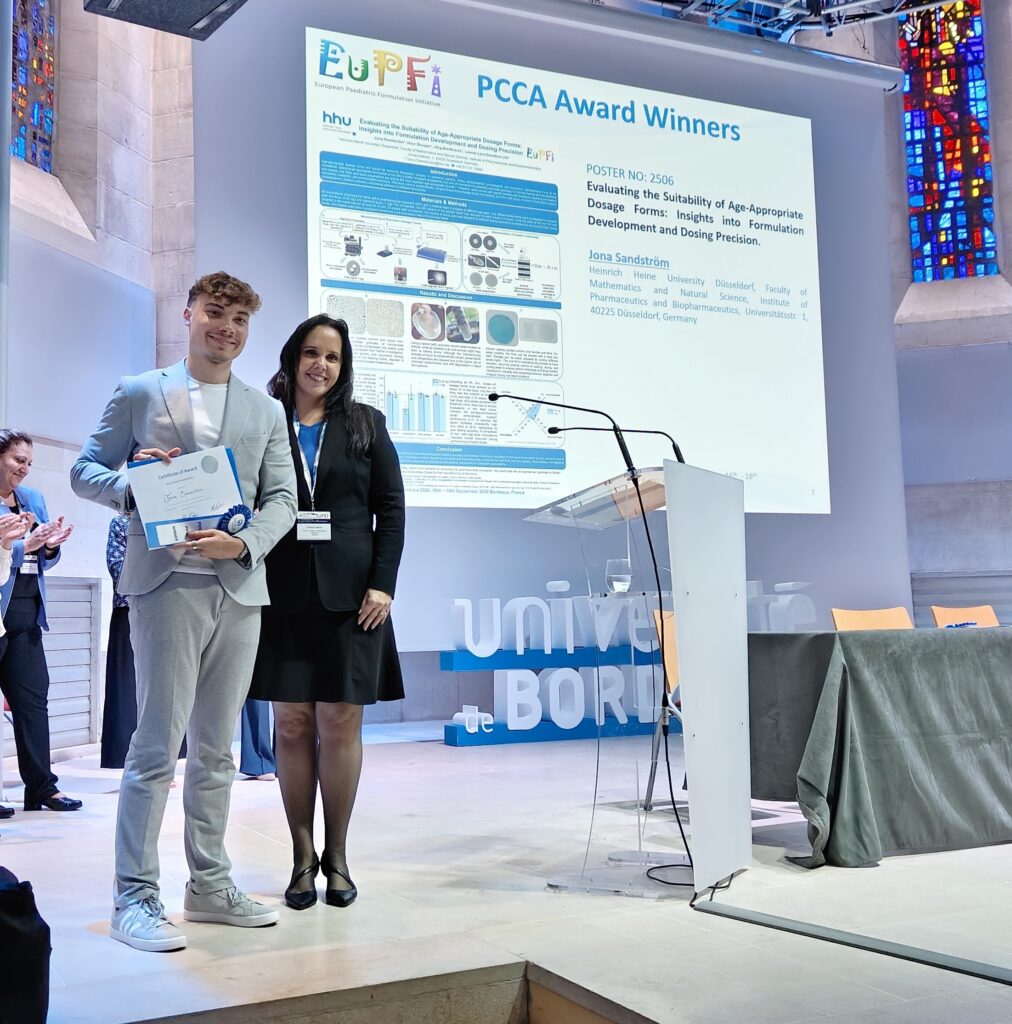
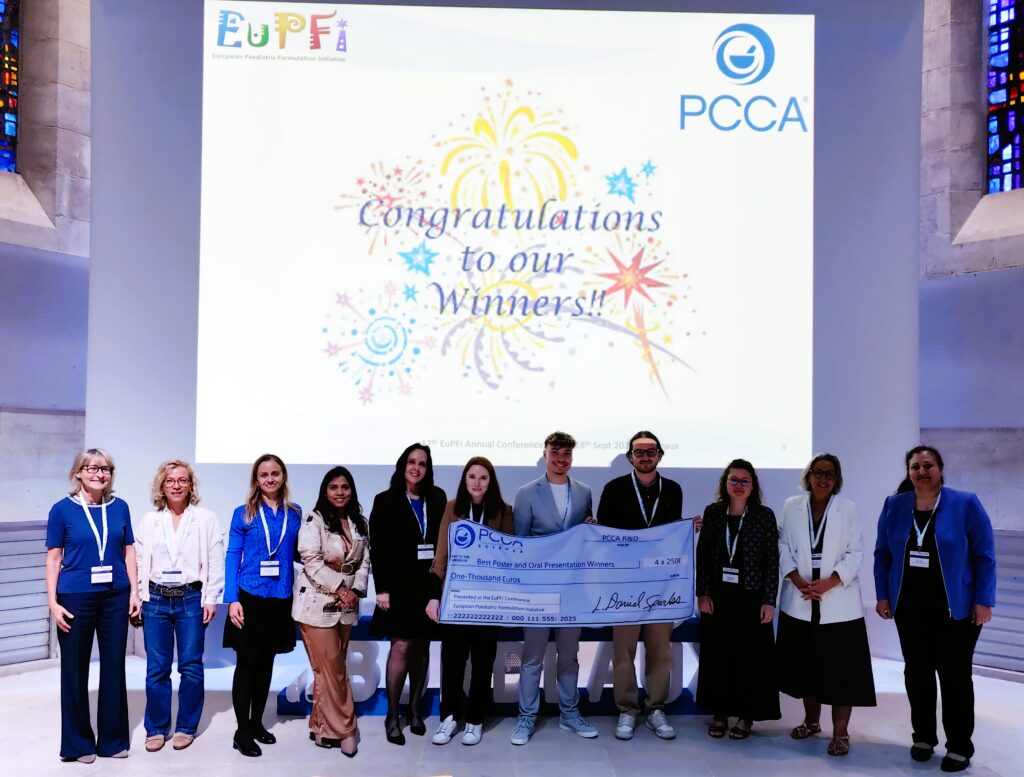
The Professional Compounding Centers of America (PCCA) sponsored three poster awards and one oral presentation award.
Winners of the poster awards:Nancy Moore, SSPC, the Research Ireland Centre for Pharmaceuticals, University College Cork, School of Pharmacy, College Road, Cork, T12 YT20, Ireland
Assessing the Stability of Dopamine Neonatal Infusions: A Two-Day Simulated NICU Study
Jona Sandström, Heinrich Heine University Düsseldorf, Faculty of Mathematics and Natural Science, Institute of Pharmaceutics and Biopharmaceutics, Universitätsstr. 1, 40225 Düsseldorf, Germany
Evaluating the Suitability of Age-Appropriate Dosage Forms: Insights into Formulation Development and Dosing Precision
Jean Laverdière, Platform of Biopharmacy, Université de Montréal, Montreal, Canada.
3D-Printed Hydroxyurea for Pediatric Use: Toward Safer and Personalized Drug Administration
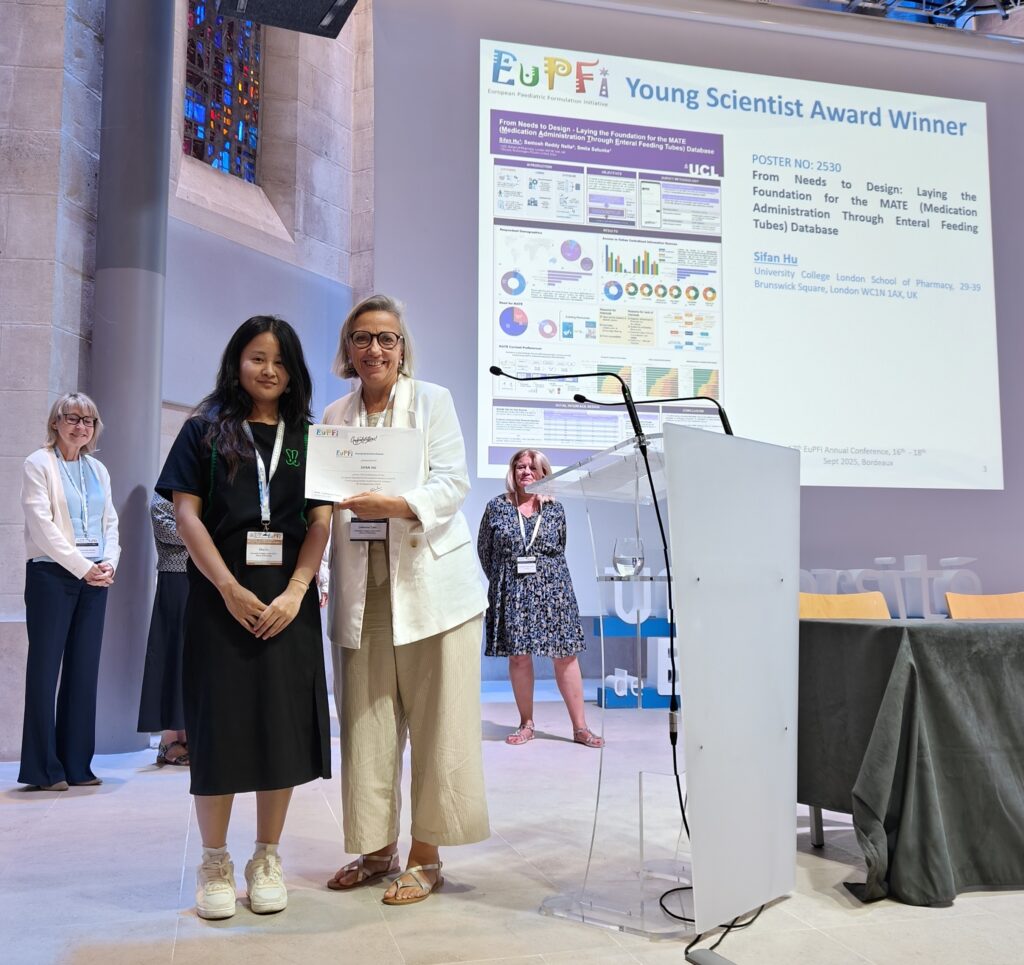
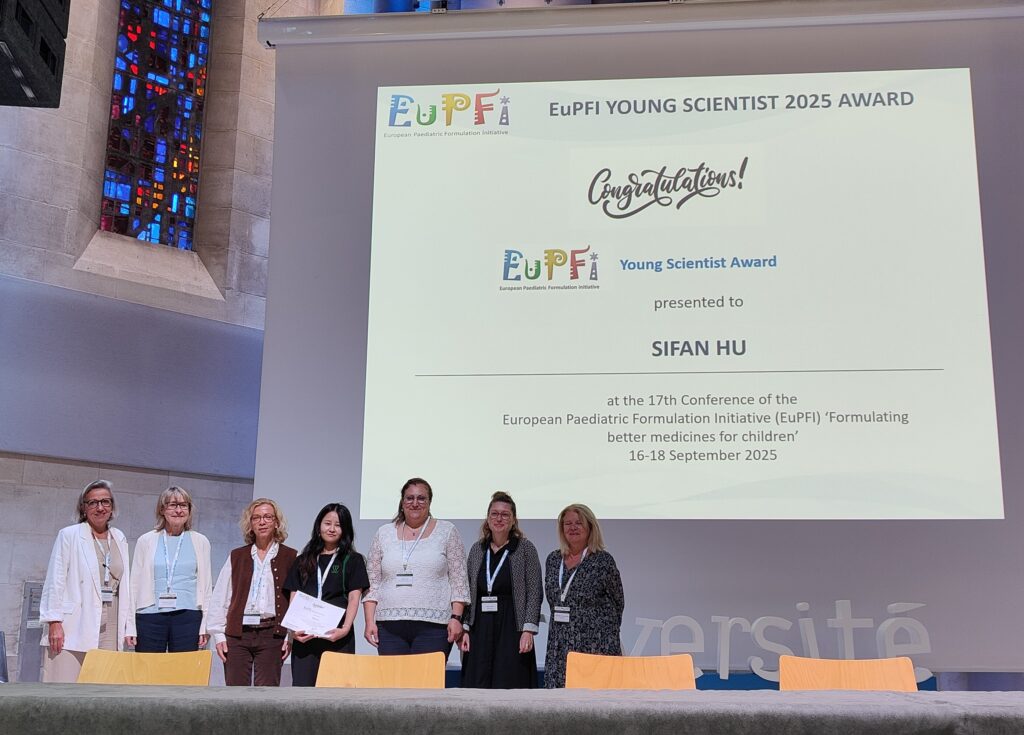
Winner of the EuPFI Young Scientist Award:
Sifan Hu, University College London, UK
Unlocking Pharmaceutical Knowledge: AI-Enabled Structured Data Extraction

EuPFI2025






Contacts
17th Conference of the European Paediatric Formulation Initiative
Conference Secretariat
APV
International Association for Pharmaceutical Technology
Kurfürstenstraße 59, 55118 Mainz/Germany
Tel.: +49 6131 9769-0
Fax: +49 6131 9769-69
Website: www.apv-mainz.de
E-mail: apv@apv-mainz.de
European Paediatric Formulation Initiative
Website: www.eupfi.co.uk
E-mail: admin@eupfi.co.uk
University College London School of Pharmacy,
29-39, Brunswick Square
London , WC1N 1AX
Phone:+44 20 3987 2885
Fax: 0044 20 7753 5942
